
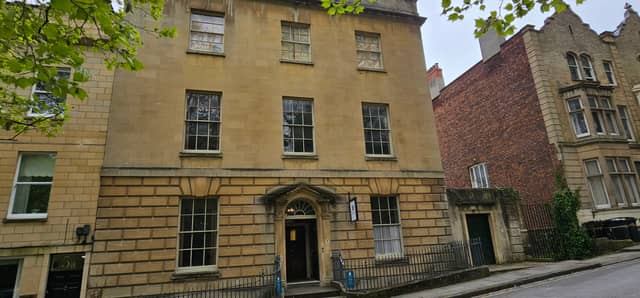

Located on 7 Great George Road, The Georgian House Museum explores what a Bristol sugar plantation and slave owner's home might have looked like around 1790.
The house was built in 1790 for John Penney, a West India sugar merchant and slave plantation owner, and designed by Bristol architect, William Paty.
The grade II listed building was also home to the freed slave Frances Coker who was a maid and Pinney's slave, Pero, after whom Pero's Bridge at Bristol Harbour is named.
Scenes for the At Home with the Georgians series by Amanda Vickery were filmed at the Georgian House in July 2010. It was also used as a filming location for BBC's A Respectable Trade series, which was adapted from the book by Philippa Gregory, about the slave trade.
The Georgian House is run by the Bristol City Council and has been presented as a museum since 1937.
The house spreads across six floors with 11 rooms across four floors accessible to the public. Visitors can explore the basement, which is comprised of the kitchen, housekeeper's room, pantry and John Pinney's cold water plunge pool; John Pinney's office, two dining rooms, a library and two drawing rooms on the ground and first floors; and a bedroom and small exhibition room on the second floor.
The museum is free and is open Saturday to Tuesday from 11am to 4pm.
Scroll through to see 30 photos from our visit to The Georgian House Museum.
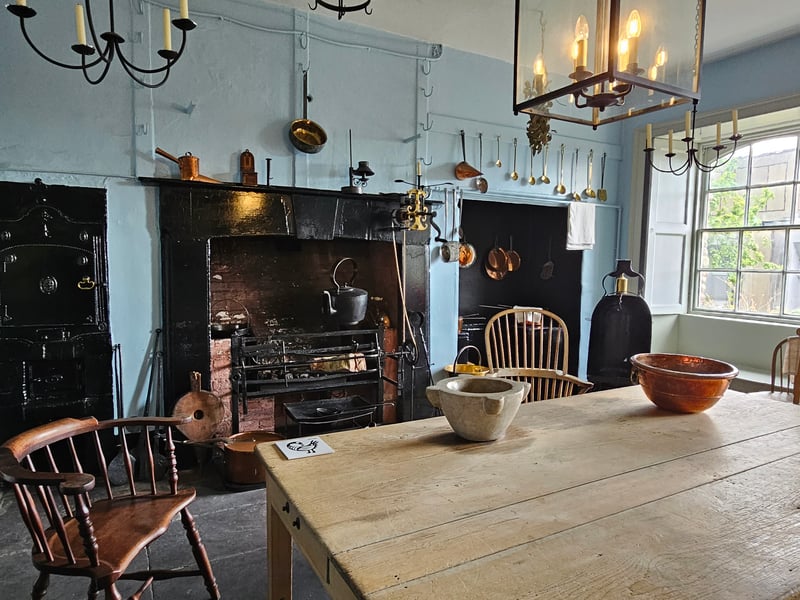
13. Kitchen
The kitchen would have been hot with the fire burning all year round. To the left of the fireplace is the oven, a door in the corner of the room leads to the butler's lift and next to it are the ends of the speaking tubes, one of the means of summoning servants. Since china was too expensive to be used below stairs, all the cooking pots and utensils would have been made of metal or wood. | National World
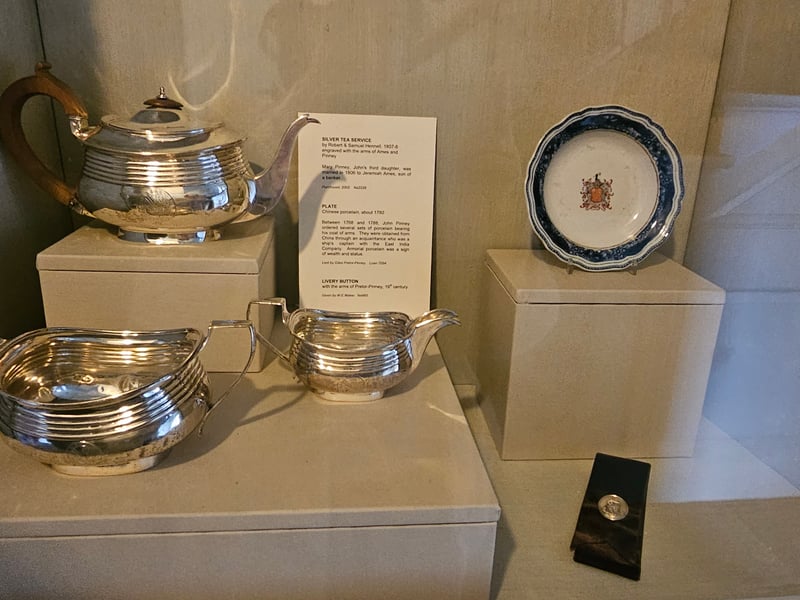
14. Tableware
John's third daughter, Mary Pinney, was married in 1806 to Jeremiah Ames, son of a banker. The silver tea service from 1807-8 is by Robert and Samuel Hennell and is engraved with the arms of Ames and Pinney. Armorial porcelain was a sign of wealth and status, and between 1768 and 1788, John Pinney ordered several sets of porcelain bearing his coats of arms. They were obtained from China through an acquaintance who was a ship's captain with the East India Company. | National World
15. Dessert
A formal dinner consisted of several courses in the 18th century, and the last course, dessert, was regarded as an opportunity for display. There would be a centrepiece of some sort which could vary from an extravagant garden scene made out of sugar to a simpler pyramid of glass salvers set with sweetmeats (e.g. jellies and syllabubs, candied fruit and flowers, sugar paste and marzipan), flowers and fruit. Sweetmeats depended on sugar and the increasing demand for these delicacies fuelled the sugar trade, which depended on slavery. | National World
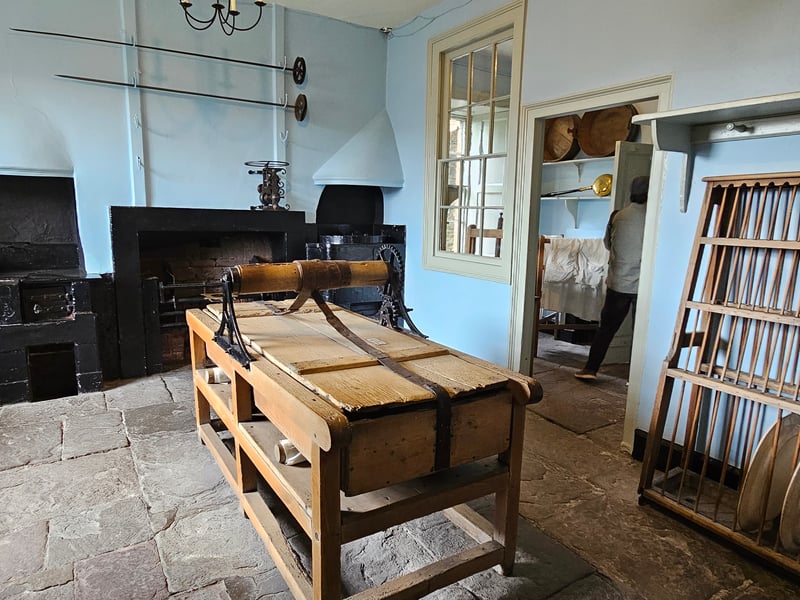
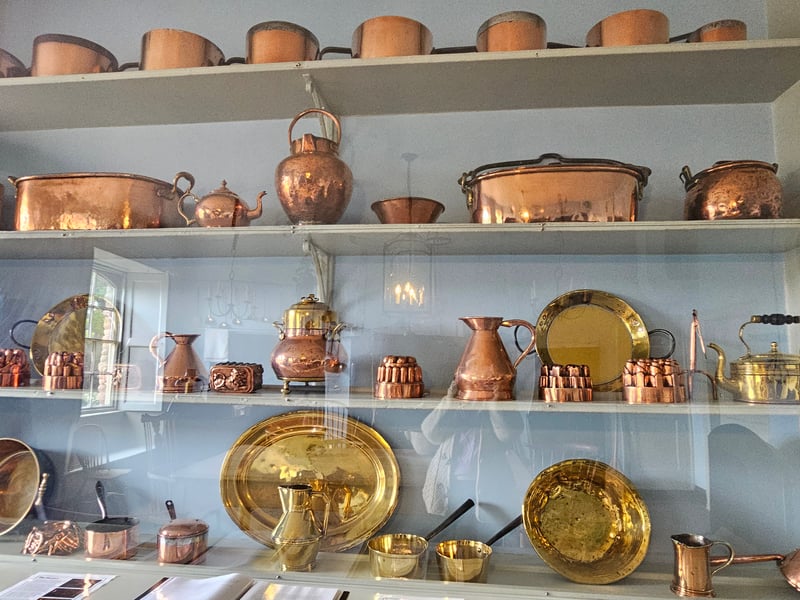
16. Laundry Room
Located next to the main kitchen, the second kitchen was primarily used as a laundry room and houses the pump for raising water from the rain and spring-fed tank below, as well as two coal-fired copper boilers. | National World