
Bristol graduate who reached SAS: Who Dares Wins final says fear can change your life
Bristol graduate Vicki Anstey studied French at the University of Bristol before building a life far beyond the path she once expected from reaching the final stages of SAS: Who Dares Wins to breaking world records and helping others rethink fear, resilience and human potential.
Fear can either close people down or show them where they need to go next. For Vicki Anstey, that lesson came after the end of a 20-year relationship, a crisis of self-belief, and one of the toughest public tests of physical and mental endurance on British television.
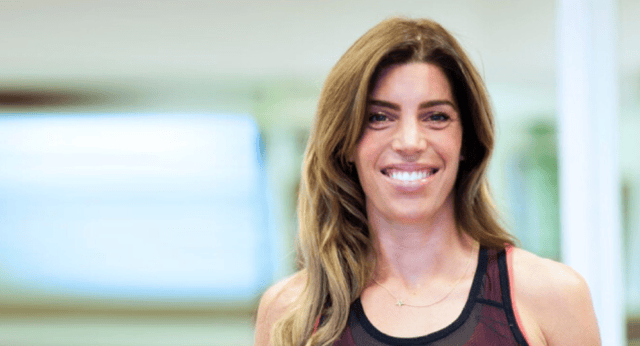

Vicki was one of the first women to reach the final stages of Channel 4’s SAS: Who Dares Wins, before going on to become a two-time Guinness World Record-holding adventurer, stress and resilience coach, TEDx speaker and human performance mentor. Her work now centres on fear, emotional endurance, pressure and the hidden capacity people often fail to recognise in themselves.
As a female inspirational speaker, Vicki draws on her own experience of reinvention rather than presenting resilience as a polished success story. She speaks about fear as something that can be understood, managed and redirected, with lessons that apply far beyond adventure, into leadership, teams and everyday working life.
In this exclusive interview with the Female Motivational Speakers Agency, Vicki Anstey discusses why fear can become a signpost, how leaders can turn pressure into clearer action, what the “secret 60%” reveals about human potential, and why growth often comes from the pursuit rather than the finish line.
Question 1. After SAS: Who Dares Wins and your TEDx talk, how did your understanding of fear change?
Vicki Anstey: “Why fear is a choice was the title of my TEDx talk back in 2018, actually. And I gave that talk just after I had done SAS: Who Dares Wins. So, I was one of the first women to ever participate in that programme and reach the final stages.
“And I went into it, to cut a very long story short, straight out of a very long 20-year relationship and a marriage that had become quite coercive. And so, I went into it with a lot of fears and really lacking in self-belief.
“I had the physical fitness to be there, but I didn't have the self-belief. And it was really one of the most life-changing experiences I've ever had, and it's become a catalyst for so many things that I've done since then.
“But what I learned through that process was that, you know, if I let my fears overwhelm me, then I wasn't going to make any progress whatsoever.
“So, I learned to sort of overcome them and to have those internal conflicts and to wrangle with the kind of voices in my head. And each and every time I chose to continue in the process over giving into my fears, a whole new kind of world opened up for me, essentially.
“So that was the first time of my life that I really understood the value of managing your thinking and your emotions. And I started then to realise that actually fear could become a signpost for me. That it was showing me the very things that I needed to kind of lean into, and that was where, you know, life was going to open up and offer wonderful opportunities.
“And, you know, off the back of that, I became quite fascinated in the neuroscience of fear and what fear is, and the psychology of it, and the sort of physiological outcomes of feeling fear or allowing fear to pervade your body, and understanding the difference between threat and challenge and how that's a choice.
“They're essentially the same emotion, but two different sides of the coin. So, I learned that if we can deal with the threat or the uncertainty of the threat, then we can kind of overcome that fear.
“So, yeah, I guess that's what I mean by fear being a choice. It's something that we can sit with and reflect, and if we can allow ourselves a moment of pause and perspective in whatever situation we're in, we can choose to take our kind of thinking and place our attention elsewhere where it might be much more helpful.”
Question 2. In business, fear often shows up as hesitation, risk aversion or poor decision-making. How can leaders reframe fear into something more useful?
Vicki Anstey: “Yeah. So, I think that really just comes down to perspective and shifting our perspective on situations that might seem to pose a threat to us.
“Understanding a bit of the sort of biology behind that and how our brains work with fear. The fact that we are wired for negative bias, that our brains are stimulated by danger, not safety. That's why we see bad news prevailing in the news and on news channels, because we know that's what stimulates human beings.
“So, if we can start to sort of rewire some of those neurons and some of those kinds of natural processes, we can actually recreate and reframe situations for ourselves. And that can open up all manner of opportunities.
“And obviously for me, that's been in the world of adventure and exploration of my human potential. But in the workplace, it might be about having enhanced clarity and consideration for different outcomes. And it might be about just really managing our thinking and therefore, of course, our subsequent behaviours and actions.
“And so, whether we decide, and that's the key word, we can decide whether something is scary or in fact exciting. We can decide whether it's a threat or an opportunity. You know that hinges on our cognitive appraisals, and we can have control over that.
“We can step back, allow some perspective to come in and some attitudinal reframing to come in. And once we've got that sort of emotional regulation, then we can be much more adaptive in our thinking, much more collaborative, much more creative in our thinking, we can overcome cognitive biases.
“So, you know, the potential outcomes for leaders then become quite obvious. There are far greater clarity and better teamwork and essentially better leadership.”
Question 3. You talk about the “secret 60%”. What does that reveal about human potential beyond elite military or endurance settings?
Vicki Anstey: “Yeah. So, the secret 60% that I speak about, it comes from a Navy SEALs principle, which is called the 40% rule. And this idea that when you think you've given everything that you've got, you still have 60% left.
“And I know we often think of Navy SEALs as being sort of, you know, extreme athletes, I guess. And often people would view me that way if they just were to read my biography.
“But actually, you know, I'm someone who wasn't particularly active until their late 20s, early 30s. You know, I was in a very stifling long-term relationship until the age of 40. I really only started exploring my true human potential in the last seven years.
“And in that time have undertaken adventures and endeavours that I never thought would be possible for me. So, it truly is the case, not just for military operators, that whatever we think we're capable of, we have just so much more.
“So really, it's about unlocking potential. It's about being curious about what more we've got. It's about building new edges. Creating new reference points for ourselves.
“You know, it's about the act of sort of retrospective thinking, thinking about where we were and perhaps how far we've come, and the act of prospection, which is the consideration of possible futures.
“So, it's sort of just again taking that step back from the kind of day-to-day grind or the very limiting situation that we might think we are in, where we have a lack of choice or a lack of agency, and actually realising that not only do we have so much more within ourselves, but that we can have so much more influence on the world around us than we think as well.”
Question 4. What do you want leaders and teams to take from your story when they are under pressure or facing change?
Answer: “Well, I hope a little bit of inspiration, perhaps some realisation that we can all do much more than we think. And some relatability within that I think is fundamental.
“I'm really not a born adventurer or a lifelong athlete. Very, very far from it. My life has taken all manner of different twists and turns. And, yeah, so I hope people hear me speak and don't just put me into a category that is kind of, oh well, I need to be someone like that to be someone like that.
“In fact, you can do anything. Any of us can do anything we set our minds to. And hopefully some really useful applications as well to take forward into their lives at work or at home.
“You know, I'm a stress and resilience coach, as well as a motivational speaker and an adventurer. So, you know, all of that knowledge about how we can kind of manage and manipulate our systems to our advantage, how we can kind of manage our thoughts and our emotions better as well. All of that comes into it.
“And in understanding that, we can give ourselves a bit more forgiveness too. That we are not just being unreasonably reactive to a situation. There's actually a lot of stuff that's going on internally that would drive that, but that we can actually manipulate to our advantage. We have some control over.
“And, yeah, I hope a fresh perspective. I'm not someone that only speaks about things that I've done, you know, in the past. I'm continuing my journey. It continues to evolve.
“As you know, I'm rowing the Atlantic in 2026. So, a whole new adventure to prepare for. And so there within that, I guess, a reminder that we never really arrive and that the real gift is kind of what you learn about yourself in the pursuit of it.”
This exclusive interview with Vicki Anstey was conducted by Tabish Ali of the Motivational Speakers Agency.