
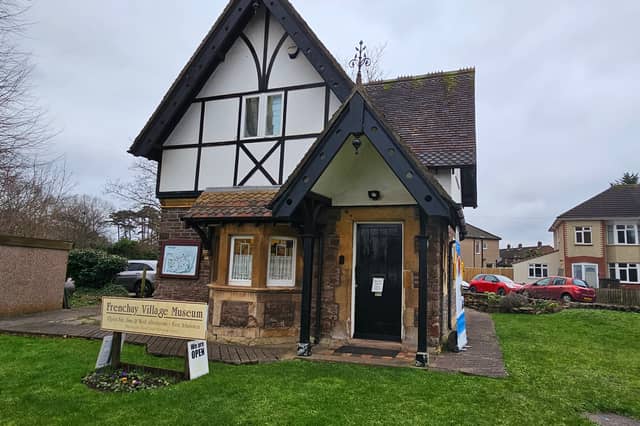

Located at the Junction of Frenchay Park Road and Begbrook Park, in a former lodge of Frenchay Park dating to 1910, the Frenchay Village Museum tells the story of Frenchay and its residents, including a mountain explorer, a Hollywood film star, a chocolate manufacturer and an assistant to Brunel.
"We've been going since April 2000, when a lot of voluntary help and some financial help from the local parish council completely refurbished West Lodge," said Hugh, a volunteer at the museum. "It's the old gateway to the big house, which is at the end of the Lime Tree Avenue.
"Our background is that we are a registered charity called the Frenchay Tuckett Society, and that's because the Tuckett family and other relations, such as the Foxes, the Howards and others were all large Quaker families in Frenchay.
"Our main themes at the museum are people, industry and hospital, plus an occasional visiting exhibition. We're an accredited museum, so we look after our own collection and anyone who loans us anything. Recently we've had some donations as well and they're all properly recorded, and we're going through our catalogue at the moment.
"We have a lot of history going back over several centuries, but we have been focusing on the 19th and 20th century with the Tuckett family and all their various endeavours, and then in the 20th century, the history of the hospital, which closed ten years ago. This year is going to be marking the tenth anniversary of the closure of a much-loved hospital, Frenchay, plus it's the 80th anniversary of the Allies landing in northern France, known as D-Day, and the Americans were here using the hospital during the Second World War."
The museum is free and is open Saturday to Sunday from 2pm to 5pm and Wednesday from 1pm to 4pm.
We were lucky to get a very informative tour of the museum from Hugh, who gave us a summarised and detailed history of the exhibitions.
Overall, the small building is packed with a lot of history around every corner and is fully run by volunteers who will go out of their way to make your visit as memorable as possible.
Here are 63 photos from our visit and what we learnt:
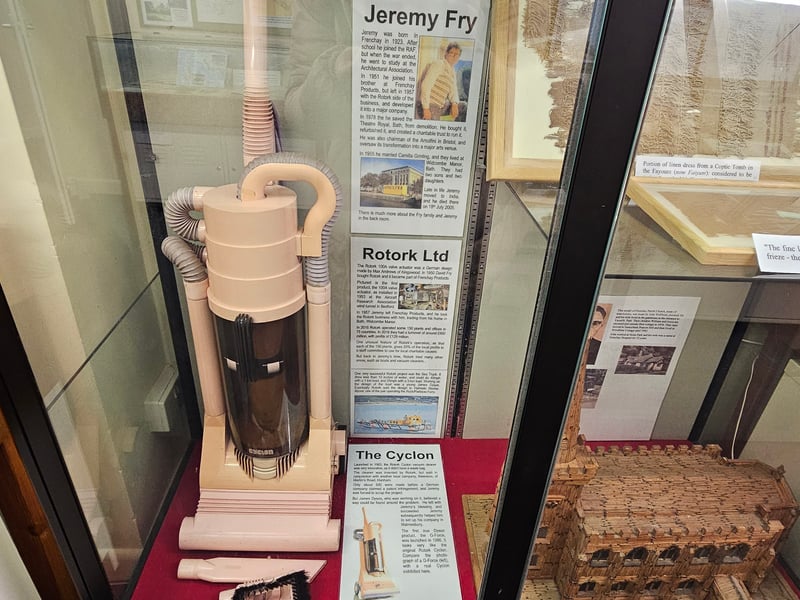
21. Dyson
"Now the engineering side of the family, not quite so famous, but did lots of things," Hugh explained, "First of all it was using the stables of the old houses when motor cars came along. You didn't need horses, so there was lots of spare space. And the stables and the mews became little engineering workshops. Eventually, they got their own factory in Kingswood and they called it Frenchay Products and they did lots of things relating to engineering including one apprentice. This apprentice was working for an offshoot of the Frenchay Products called a Rotork and eventually he decided he wanted to go out on his own and he'd been involved with an early vacuum cleaner, so they said, 'Well it's not selling that well and there's a problem with the legal patents so off you go and see what you can do'. His name was James Dyson and we have a very early example that you might be able to recognize even today." | National World
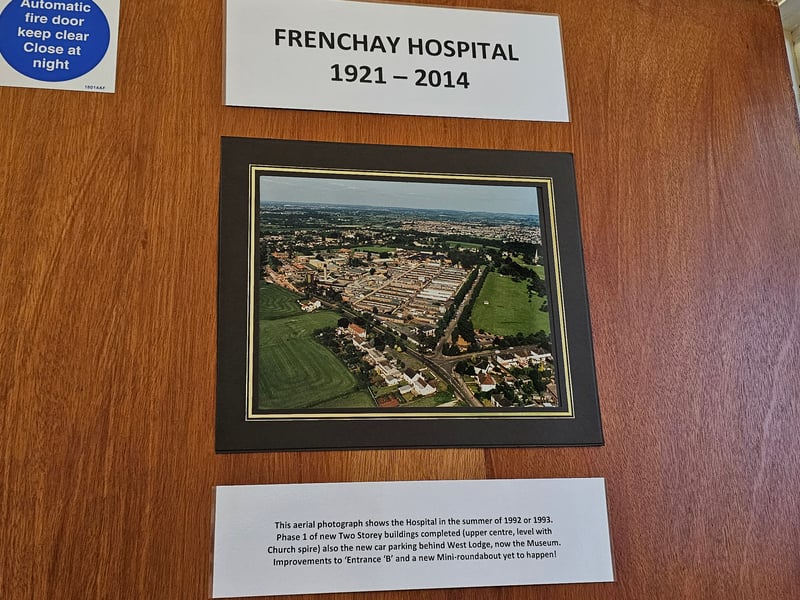
22. Frenchay Hospital
The Frenchay Hospital exhibition is on the top floor of the museum and covers the history of the hospital as a sanatorium, its involvement in WWII and its use until its closure almost a decade ago. | National World
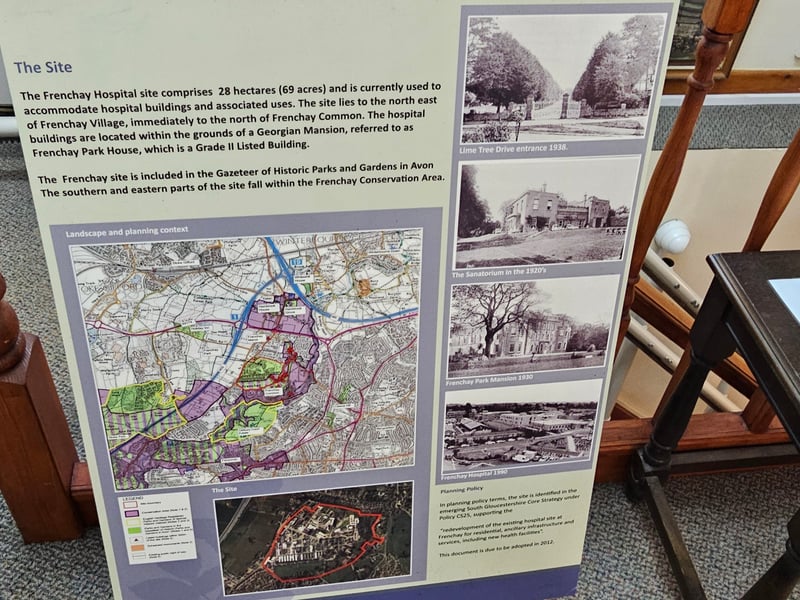
23. Information Board on Frenchay Hospital
The information board includes a map of the site as well as photographs throughout its history. | National World
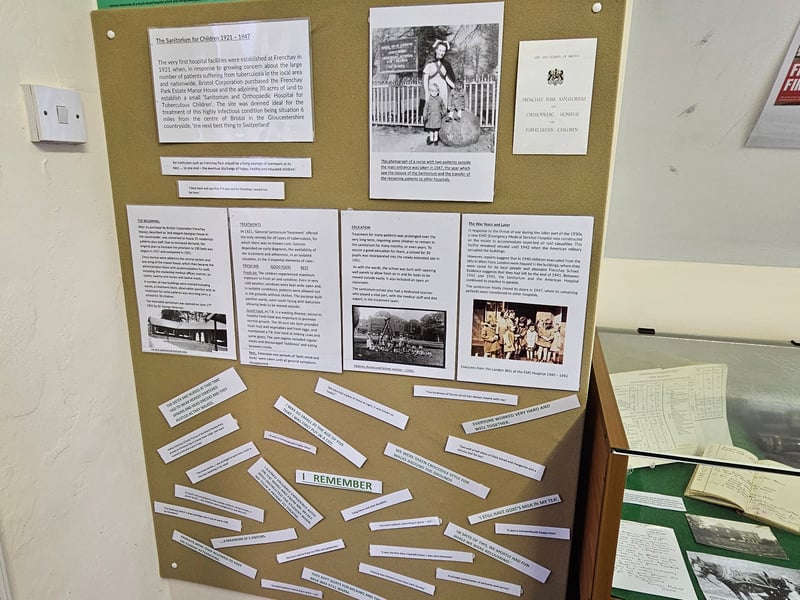
24. Sanatorium
"There were many big houses in Frenchay. One of them, perhaps the grandest of them all, was bought by Bristol Corporation which is the forerunner of Bristol City Council because it came up for sale after the First World War. As you may know, many men and horses from all the big houses were sent to what we call the Western Front in France, but not many of them came back because it was a very pretty static war in the trenches. However, after the war had been finished and there was the Treaty of Versailles and the amnesty and everything else and then it was finally over, everybody's getting back into the new normals that were after the First World War, realised the big houses were not viable and so the big house which is just here, Frenchay Park, was sold off and it was bought by Bristol Corporation because they needed somewhere to treat children with TB which is the medical abbreviation of tuberculosis which is a very awful disease to get at any age but there were no real treatments apart from light, air and good food. And what better than a grand country house, going for a song after the First World War because people couldn't keep them up, and they could immediately move in and convert the big house to dormitories for children who needed to be treated and have staff there. So that is the start of 1921 of Frenchay Hospital. By October the children were moving into these quickly converted grand upper rooms, and bedrooms, all became dormitories etc. and of course, there was a large place to cook and eat and there was a farm with animals, particularly chickens, so there was good food in this vast estate that was all purchased and thus it stayed for 10 years with just the big house and the trees and the open parkland and then they realized they needed more ward blocks so by 1928-29 they had some plans, they got tenders and by 1931 they had the first new buildings, new purpose-built wards and so they could treat more children went up from about 20 to 100 who all had this dreadful thing called TB" Hugh explained. | National World