
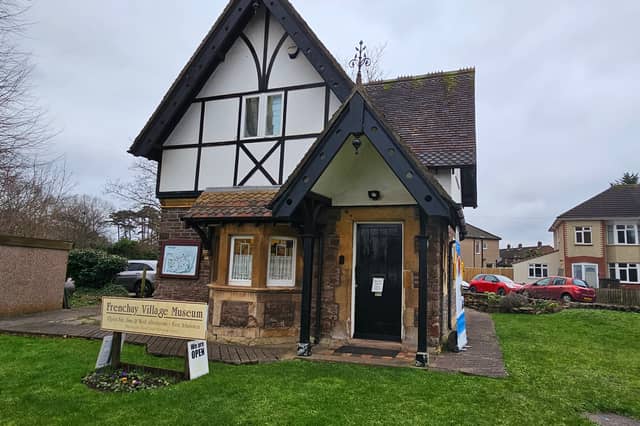

Located at the Junction of Frenchay Park Road and Begbrook Park, in a former lodge of Frenchay Park dating to 1910, the Frenchay Village Museum tells the story of Frenchay and its residents, including a mountain explorer, a Hollywood film star, a chocolate manufacturer and an assistant to Brunel.
"We've been going since April 2000, when a lot of voluntary help and some financial help from the local parish council completely refurbished West Lodge," said Hugh, a volunteer at the museum. "It's the old gateway to the big house, which is at the end of the Lime Tree Avenue.
"Our background is that we are a registered charity called the Frenchay Tuckett Society, and that's because the Tuckett family and other relations, such as the Foxes, the Howards and others were all large Quaker families in Frenchay.
"Our main themes at the museum are people, industry and hospital, plus an occasional visiting exhibition. We're an accredited museum, so we look after our own collection and anyone who loans us anything. Recently we've had some donations as well and they're all properly recorded, and we're going through our catalogue at the moment.
"We have a lot of history going back over several centuries, but we have been focusing on the 19th and 20th century with the Tuckett family and all their various endeavours, and then in the 20th century, the history of the hospital, which closed ten years ago. This year is going to be marking the tenth anniversary of the closure of a much-loved hospital, Frenchay, plus it's the 80th anniversary of the Allies landing in northern France, known as D-Day, and the Americans were here using the hospital during the Second World War."
The museum is free and is open Saturday to Sunday from 2pm to 5pm and Wednesday from 1pm to 4pm.
We were lucky to get a very informative tour of the museum from Hugh, who gave us a summarised and detailed history of the exhibitions.
Overall, the small building is packed with a lot of history around every corner and is fully run by volunteers who will go out of their way to make your visit as memorable as possible.
Here are 63 photos from our visit and what we learnt:
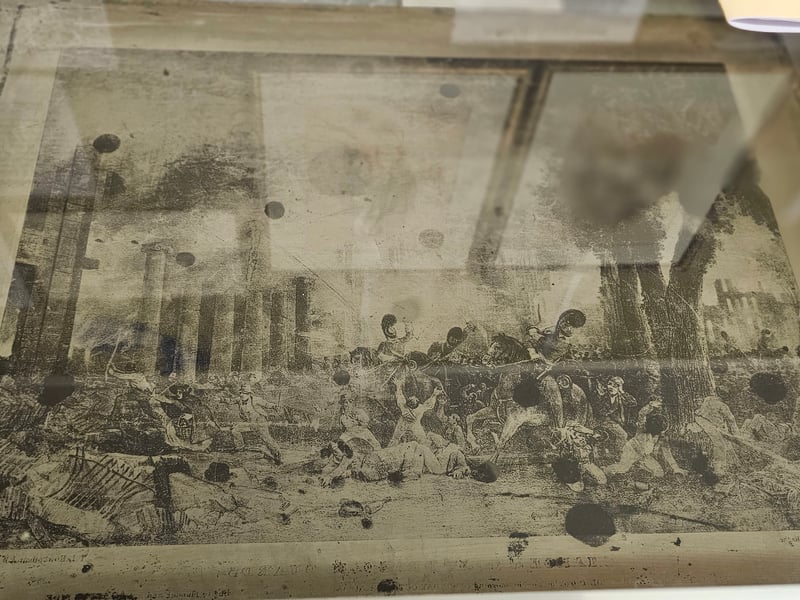
5. Bristol Riots
Riots broke out across the country after reforms aimed at giving more parliamentary power to cities like Bristol had failed. In Bristol two people who had opposed the bill were the target of popular hate - the Bishop of Bristol who voted against the bill in the Lords, and Sir Charles Wetherell who had opposed it in the Commons. | National World
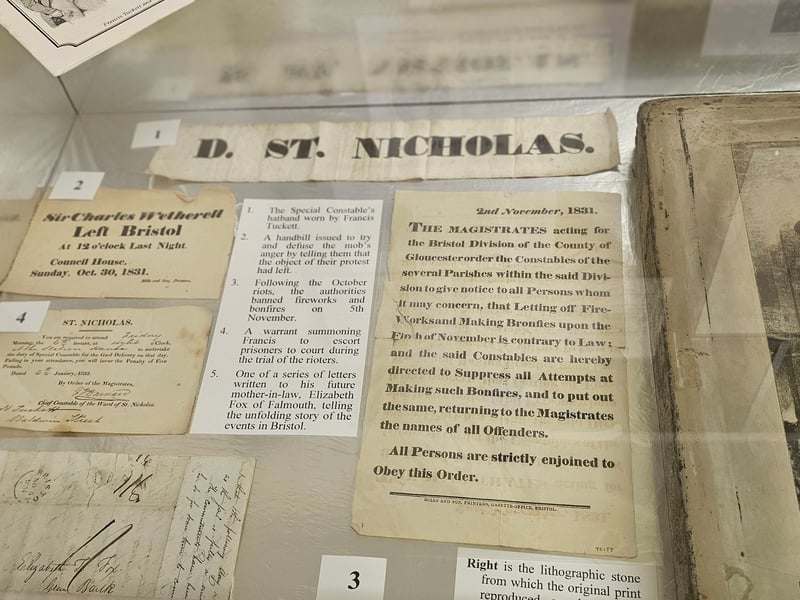
6. Memorabilia of the Bristol Riots
The display includes a warrant summoning Francis Tuckett to escort prisoners to court during the trial of the rioters and a series of letters written to his future mother-in-law, Elizabeth Fox of Falmouth, telling the unfolding story of the events in Bristol. | National World
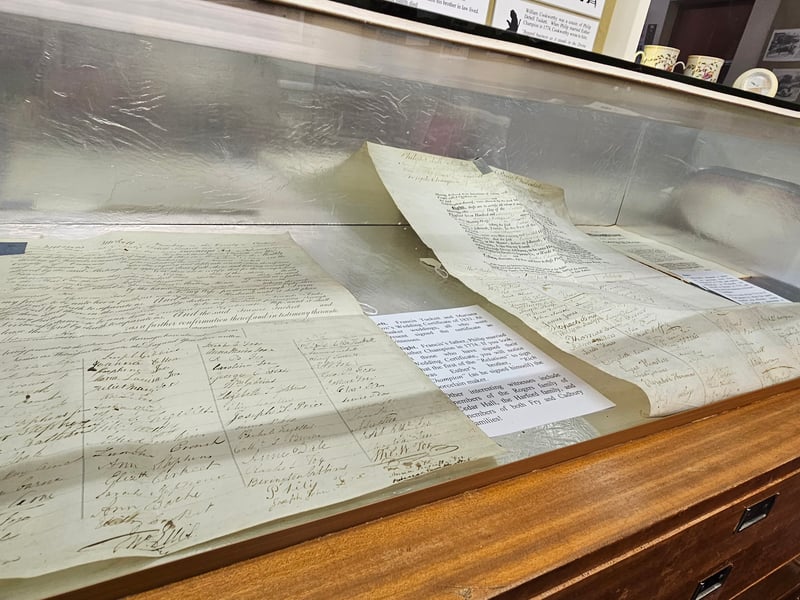
7. Wedding Certificates
Francis Tuckett and Mariana Fox's Wedding Certificate (1833) and Philip Tuckett and Esther Champions' Wedding Certificate (1774) which includes signatures of her brother Richard Champion as well as members of the Rogers family of Cedar Hall, the Harford Family and members of both Fry and Cadbury families. | National World
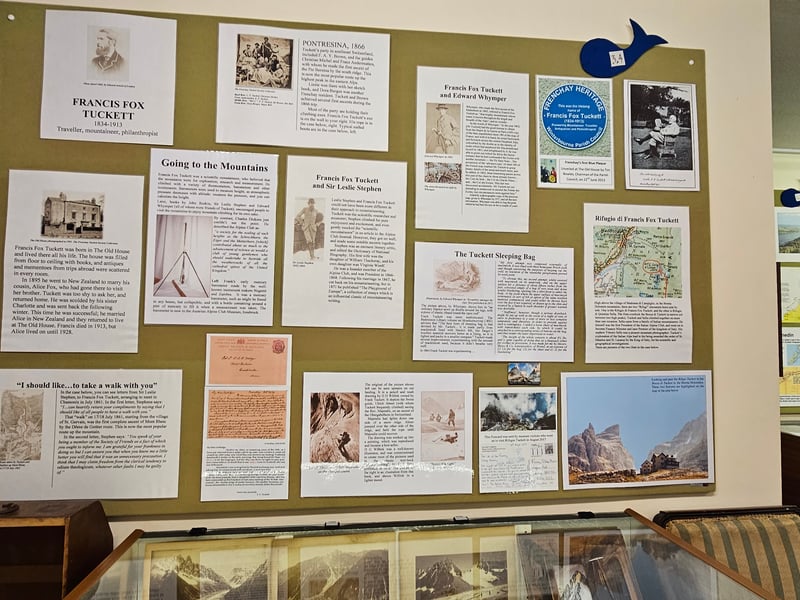
8. Francis Tuckett
"Tuckett was father and son and the son who went into the family business in central Bristol and walked in from Frenchay every day along the River Frome, and on that basis was also instrumental in getting Oldbury Court and Eastville Park into Bristol City Council management so we have this Frome Valley Walkway which is another Tuckett legacy," Hugh explained. "Tuckett was a traveller, mountaineer and philanthropist, and he liked climbing in the Alps. They had made quite a lot of money in their business in central Bristol which was leather, which was a very big commodity in the 1850s, so they could take summers off and catch a train. Trains were quite new in the 1850s and then a sailing or early steamship across the English Channel to France and then another day on the train finishing up in the Alps where they would spend a summer walking and climbing By 1850/ 1860, the survey of India had been finished and they knew beyond doubt that Mount Everest was the highest mountain in the world. They had conquered all the alpine scents and were keen to move on. So Tuckett started experimenting with rope and sleeping bags because he knew it was going to be much more difficult to climb mountains in India, i.e. Everest, which is twice as high as the highest in the Alps so a very different expedition. It didn't come to pass for other reasons." | National World