
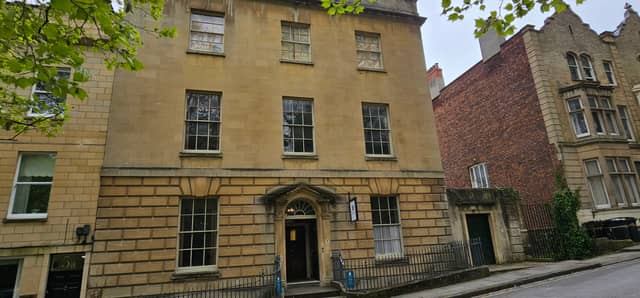

Located on 7 Great George Road, The Georgian House Museum explores what a Bristol sugar plantation and slave owner's home might have looked like around 1790.
The house was built in 1790 for John Penney, a West India sugar merchant and slave plantation owner, and designed by Bristol architect, William Paty.
The grade II listed building was also home to the freed slave Frances Coker who was a maid and Pinney's slave, Pero, after whom Pero's Bridge at Bristol Harbour is named.
Scenes for the At Home with the Georgians series by Amanda Vickery were filmed at the Georgian House in July 2010. It was also used as a filming location for BBC's A Respectable Trade series, which was adapted from the book by Philippa Gregory, about the slave trade.
The Georgian House is run by the Bristol City Council and has been presented as a museum since 1937.
The house spreads across six floors with 11 rooms across four floors accessible to the public. Visitors can explore the basement, which is comprised of the kitchen, housekeeper's room, pantry and John Pinney's cold water plunge pool; John Pinney's office, two dining rooms, a library and two drawing rooms on the ground and first floors; and a bedroom and small exhibition room on the second floor.
The museum is free and is open Saturday to Tuesday from 11am to 4pm.
Scroll through to see 30 photos from our visit to The Georgian House Museum.
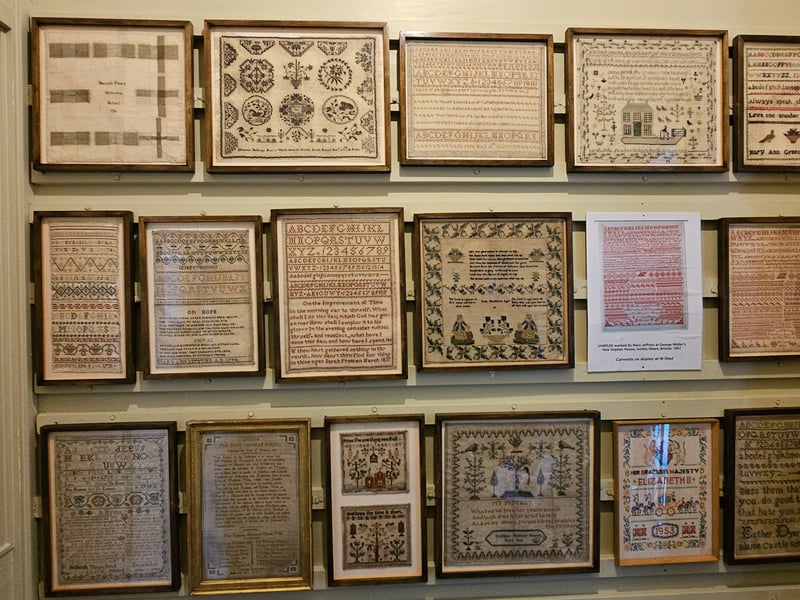
25. Samplers
Sewing was an important skill, and from the 1500s to the mid-1900s, young girls (and occasional boys) learned to sew by working one or more samplers. Samplers also provided an opportunity for the young to learn the alphabet, geography and religion. The display at the Georgian House is from Bristol Museum & Art Gallery's large and important collection of samplers. It includes examples of the world-famous red and white "Bristol Orphanage" samplers worked at George Müller's Orphan Houses in Ashley Down, as well as a typical Quaker sampler with its distinct octagonal motifs. | National World
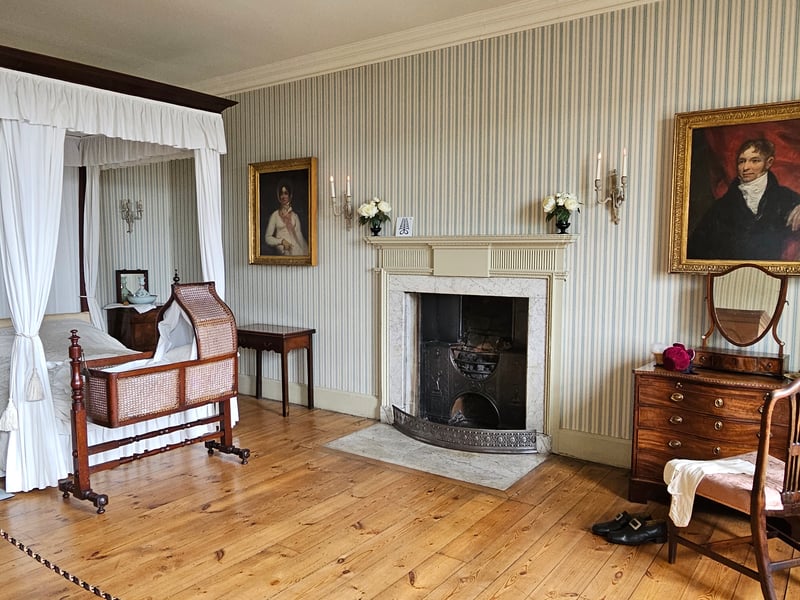
26. Bedroom
There are a total of four bedrooms on the second floor. The main bedroom's window overlooks the city and docks. The four-poster bed is hung with modern curtains in a specially-woven reproduction of 18th-century "dimity". A portrait of John Pinney as a young man in the heights of fashion with his embroidered waistcoat hangs between the windows. | National World
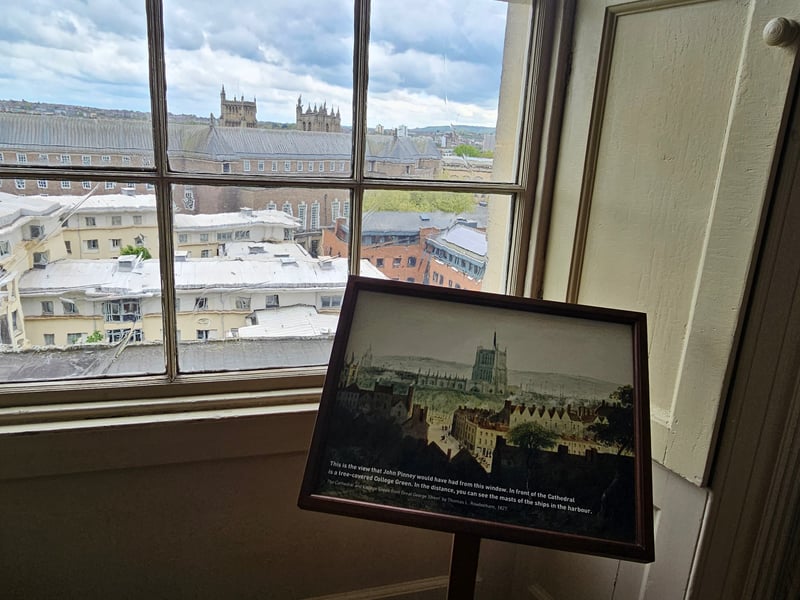
27. View
The window from the second floor overlooks the back of the Bristol City Council, the buildings behind it and part of the Bristol Cathedral. Next to the window, an information board depicts the view that John Pinney would have had from this window: the front of the Cathedral is covered by trees from College Green and masts of the ships in the harbour can be seen in the distance. | National World
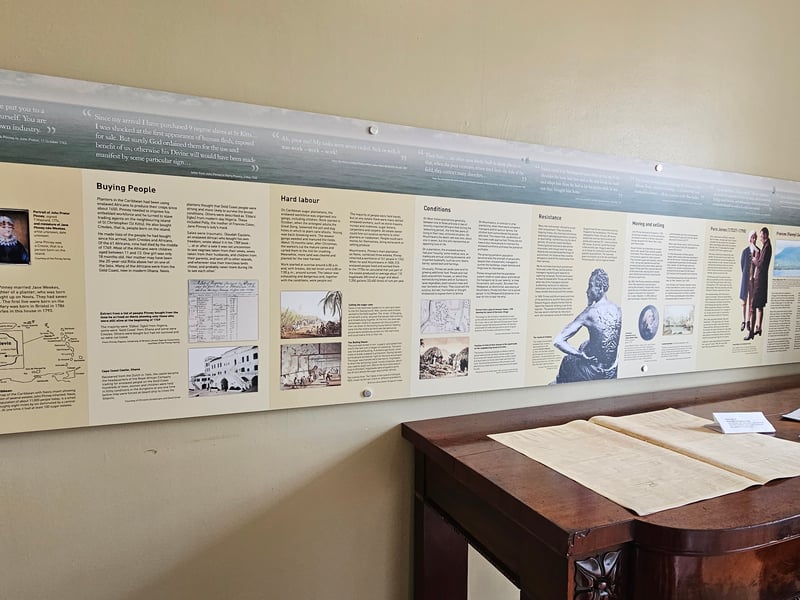
28. Display
Next to the main bedroom, there is a small display on slavery, with a particular focus on John Pinney and his plantation in Nevis. | National World