
Why independent audits matter for fairness in online casino games
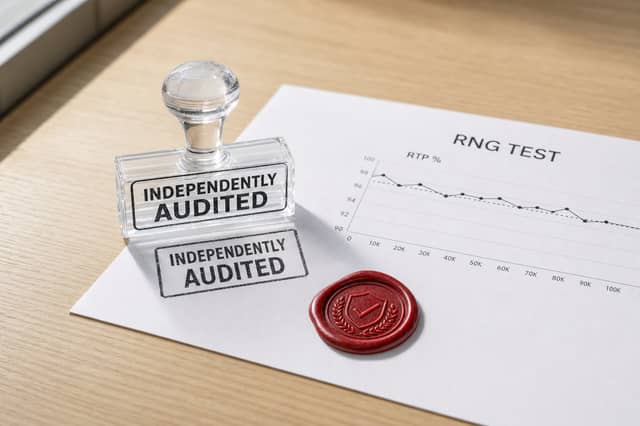

Players expect online casino games to deliver fair outcomes, but true transparency is often hidden behind digital walls. Independent audits play a critical role in ensuring that what happens behind the scenes aligns with the experience promised to customers.
Understanding the process and impact of these audits helps players make informed decisions about where and how they play online.
Fairness is a central concern for anyone engaging with online casino games, especially when every spin and shuffle happens digitally without visible oversight.
666 Casino highlights the challenge players face, since you must trust unseen technology to operate honestly. Knowing how games are checked and verified can help you judge whether the platform you are using deserves your trust. Independent game audits form a key part of modern casino regulation, providing essential safeguards for consumers.
Understanding the function of independent game audits
Online casino platforms use sophisticated software to simulate the randomness of traditional gaming. However, for most people, it remains impossible to see exactly how results are determined, creating obvious concerns about fairness. Independent game audits exist to address this by putting the technology under unbiased scrutiny.
Unlike internal quality assurance, which is carried out by developers or the casino itself, independent game audits are conducted by third-party organisations. These external audits test games for compliance with set standards, confirming that advertised mechanics and odds are upheld in practice. The separation between those building the games and those testing them is essential for impartial evaluation.
Roles of external auditors and what independence entails
Independent game audits are conducted by accredited laboratories or testing services, which operate separately from online gaming companies. Their role is to verify technical aspects such as randomness, game rules, and payout levels according to established industry criteria. Accreditation helps support the expectation that these auditors follow accepted procedures and maintain an objective stance.
To maintain independence, these labs adopt strict standards, regular review cycles, and transparent reporting structures. Repeat testing and industry oversight can reduce the risk of bias, providing players with additional assurance that games comply with relevant regulations. The use of separate, regulated auditors distinguishes these checks from internal reviews or routine developer testing.
Key elements verified during the audit process
Auditors typically focus on mathematical and operational aspects of online casino games. One primary concern is randomness, which underpins the unpredictability vital to genuine gambling. By evaluating random number generators and game logic, auditors help detect systematic bias that could disadvantage players unfairly.
Return to Player percentages, also known as RTP, are another focal point. The advertised RTP represents the expected percentage of wagered money a game returns to players over time. During an audit, inspectors confirm that the in-game workings match published RTP figures and fall within acceptable tolerance ranges.
Beyond core maths and RTP, auditors check that stated rules, bonus features, and edge-case scenarios function as described. They explore what happens during interruptions like disconnections or session errors to help ensure no player is unfairly penalised or denied due winnings. These checks provide a safety net against both intentional and accidental faults.
During these audits, examiners record detailed findings, which are summarised in certification reports. These reports often underpin public-facing seals or confirmation messages offered by casinos. This process is incorporated within regulatory guidance, such as that found in ASA guidance on gambling advertising and consumer protection, which addresses transparency and fairness in gambling marketing.
How audit procedures are implemented in practice
Certification of a new online casino game typically takes place before it is released to the public. Reviewers subject both the core code and overall behaviour to a series of tests, which confirm the game operates within prescribed parameters. Pre-release testing is a common requirement in regulated online gambling markets.
However, independent game audits are not limited to initial launches. Ongoing monitoring is also used, including periodic spot checks, and updated games can be re-examined through change control mechanisms. Auditors track software versions to help ensure that updates do not alter fairness or introduce faults.
If significant code changes or feature additions are made, those updates may trigger a new round of scrutiny. Effective change control procedures reduce the chance that audited games develop unnoticed vulnerabilities or discrepancies between advertised and actual performance. The combination of pre-release and ongoing reviews helps support long-term assurance for players and regulators.
Public transparency and limits to visible information
Players will often see audit outcomes in the form of certificates, badges, or summarised RTP information posted by online casino platforms. These visible markers can signal participation in third-party testing and may be checked by consumers seeking extra confidence. Summary statements about game fairness act as shorthand for a broader process behind the scenes.
However, there are practical limits to what is shared publicly. Proprietary code, full audit datasets, and certain technical details are not made widely available due to intellectual property reasons and the risk of exploitation. Transparency is balanced against necessary discretion, allowing audits to build trust without compromising security or the commercial interests of game providers.
Regulation, licensing, and the broader compliance framework
In many regulated environments, independent game audits are a component of licensing. Authorities may require platforms to provide evidence that their products have met established standards, with compliance monitored through periodic reporting. Audits can reinforce a broader framework that supports player protection and fairness.
These audits form one layer in a wider framework that can include payment security, identity checks, responsible gambling tools, and dispute resolution. No single control can provide absolute safety, but each measure can reduce risk and increase market integrity. The presence of an audit regime can act as a deterrent against malpractice and inadvertent errors.
Misconceptions about guarantees and rig-proof gaming
A common misconception is that an audited game guarantees winning outcomes or ensures luck is on your side. In practice, independent game audits verify the integrity of processes and the accuracy of published information, but cannot influence or predict results for individual players. The randomness embedded in each game remains outside anyone’s control.
Another misunderstanding is equating independent game audits with absolute immunity from tampering or malfunction. While audited games are less likely to experience problems, no audit can protect against every conceivable issue. Verification steps can reduce risk and boost accountability, but outcomes remain subject to chance.
Empowering players through audit awareness and practical checks
As a player, you can take simple steps to gauge a platform’s commitment to fairness. Look for references to third-party testing, displayed RTP rates, and verification seals on both websites and within games. This evidence is a useful starting point for distinguishing between regulated, verified platforms and less transparent alternatives.
Ultimately, the rise of independent game audits has contributed to higher expectations of fairness and transparency in online casino games. When combined with licensing oversight and clear information, audits can help support consumer confidence in digital gambling products. Awareness of what audits do, and what they do not do, can help players assess risk more realistically.
If you suffer from a gambling problem or suspect somebody you know does, then we strongly suggest that you call the National Gambling Helpline at 0808-8020-133 to talk with an advisor for help and to make gambling safer for you or your loved ones. Remember all gambling sites and guides are 18+ only.
Visit these free gambling addiction resources:
· https://www.gamstop.co.uk/
· https://www.gamcare.org.uk/
· https://www.begambleaware.org/