
Vicki Anstey: Why real resilience is built in the hardest moments
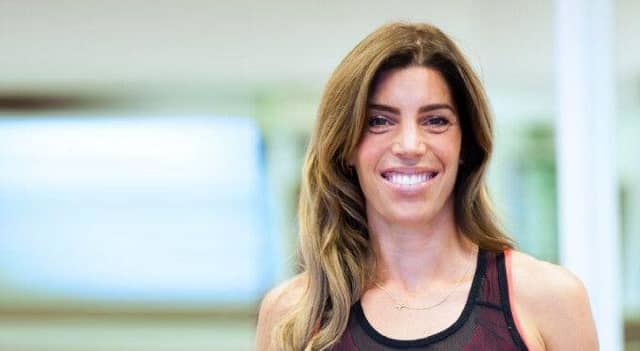

Vicki Anstey studied at the University of Bristol, where she completed a BA in French, developing a strong foundation in communication, reflection, and critical thinking that continues to shape her work today.
A world-record-holding endurance athlete, Vicki has operated in some of the most extreme physical and psychological environments, from rowing across the Pacific to cycling non-stop across America. These experiences inform her grounded, experience-led perspective on performance.
She is now recognised as a mental resilience speaker, working with organisations and leaders to explore psychological safety, sustainable performance, and how individuals respond under prolonged pressure.
In this exclusive interview with the Mental Health Speakers Agency, Vicki shares her insights on resilience, leadership, and what it means to perform well without losing sight of wellbeing and integrity.
Question 1. You’ve spent years operating at the edge of physical and psychological limits. From that perspective, why is deliberate exposure to discomfort such a critical catalyst for long-term resilience and growth?
Vicki Anstey: “I mean, again, this is about reframing what we consider to be our capabilities, and it’s about building resilience, essentially.
“Resilience is the combination of all sorts of moments in our lives, experiences, hardships and difficulties that combine and create this sort of robust system that allows us to move forward and realise that actually, if we dealt with that, we can absolutely deal with this, and that builds and creates its own momentum.
“That momentum actually becomes, in some ways, quite addictive, which can be a wonderful door-opening opportunity in life. But I think it’s also not just about pushing hard and pushing harder and constantly trying to find new edges. It’s also about having moments of peace and restoration and allowing ourselves to truly relax.
“There’s a wonderful saying by Einstein that a lazy man will never know the enjoyment of a good rest, and I love that. I’ve experienced that myself, having really pushed myself through situations that have been extremely uncomfortable at times, sometimes life-threatening, in really extreme environments, and enduring quite a lot of hardship.
“Not just in experiences that I’ve chosen to go into, but also in my own life, in relationships that I’ve endured. Having gone through those hardships and experienced that discomfort allows you to experience true comfort. It really teaches you who you are.
“When you go through those periods of time, you realise what you’re actually capable of, what’s really in there, and what internal resources we all have access to and can utilise.”
Question 2. You often distinguish between ‘winning’ and ‘winning well’. Drawing on your experiences across extreme endurance challenges, how do you define success when performance is measured not just by outcomes, but by how they are achieved?
Vicki Anstey: “The difference between winning and winning well really comes from the juxtaposition of two very different experiences in my life: rowing across the Pacific and cycling non-stop across America. The first involved very little psychological safety and a very dysfunctional team, and the latter was the absolute opposite.
“You can set and break world records, which feels like a huge achievement, but you can also feel a lot of regret if you haven’t secured that achievement well. That was certainly my experience from rowing across the Pacific. There’s something quite extraordinary about knowing that you’ve set a new world record, but not feeling any real joy from that achievement.
“It’s about reapplying the learnings from that, and any time we find ourselves in dysfunctional teams, unpacking what’s lacking. Not just what marginal gains we should be looking for, but what the marginal deficits are as well. How well do we know each other? How well do we really know ourselves? That’s of vital importance.
“Regardless of the outcome, whether you secure a sale or an achievement in business or sport, if you’ve done it with integrity, the outcome doesn’t matter as much. It’s about what you’ve learned about yourselves and each other.
“I talk a lot about the concept of free speed. In cycling terms, that’s about increasing speed without changing power output by addressing things like position, aerodynamic drag, and even where you put your water bottle or how clean your chain is.
“I discovered that all of that comes down to people. It’s about reducing or removing unhelpful drag, emotional friction, or unhelpful attitudes when a team isn’t moving smoothly in the same direction.
“Although I wouldn’t choose to go through an experience like my Pacific row again, it’s provided a very helpful reference point from which to adjust future endeavours and advise teams and leaders on what really constitutes true psychological safety and why we need it so much.”
Question 3. Psychological safety is widely discussed in high-performance environments, yet often misunderstood. Based on your work with elite teams and extreme expeditions, what role does genuine psychological safety play in sustained performance under pressure?
Vicki Anstey: “It’s a much-used term and I don’t think it’s always very well understood. Psychological safety isn’t just about being nice to each other. It goes much deeper than that. It’s a biological imperative.
“There are a lot of things that go on under the skin in our central nervous systems that are reliant on us feeling a sense of belonging. Feeling that we can raise concerns or offer suggestions without fear of judgement or negative outcomes. It’s about social engagement and inclusion.
“Once we establish that in a meaningful way in our teams and organisations, output, productivity and efficacy accelerate rapidly. It’s not just about being polite or kind, although those things are nice to have. It’s about understanding the value of a deep sense of psychological safety and not being afraid to make mistakes.
“Teams with the highest levels of psychological safety often make the most mistakes, not because they’re worse, but because they’re happy to report them, learn from them and debrief. It creates an environment where people feel heard, not just listened to, and where they have agency, self-efficacy and a real sense of impact.”
This exclusive interview with Vicki Anstey was conducted by Megan Lupton of the Motivational Speakers Agency.