
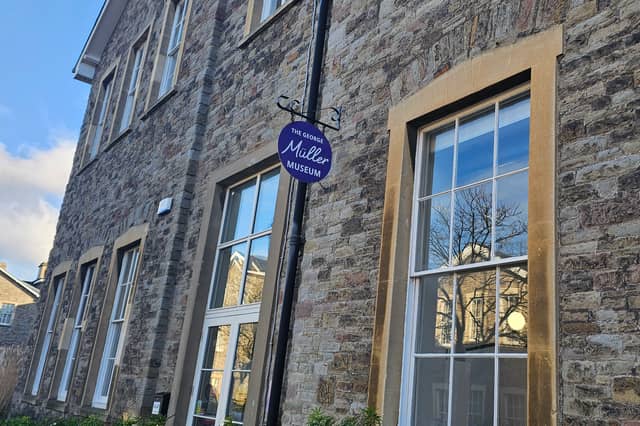

The George Muller Museum in Ashley Down is not very well known but it celebrates the incredible story of how George Muller cared for and educated over 10,000 orphans in Victorian Bristol.
He was born in the Prussian village of Kroppenstedt, which is now in the eastern part of Germany, and spent much of his youth gambling and drinking until 1825 when urged by his father, Muller enrolled at Halle University in Germany to study theology.
He continued his mischievous lifestyle until November when, after being invited by his friend Beta to a Bible Study at the home of a gentleman named Herr Wagner, Muller became Christian and stopped drinking, gambling and stealing.
Muller became a missionary in London after graduating in 1829, but only two months after, he became ill and was sent to Teignmouth in Devon to rest and recover where he befriended Henry Craik and became minister at Cralk at Ebenezer Chapel.
After marrying Mary Groves in October 1830, Muller decided to stop taking his salary and instead rely entirely on voluntary donations and would never appeal for funds.
Muller moved to Bristol in May 1832 where he became a pastor for Gideon Chapel and Bethesda Chapel alongside his friend Henry Craik. In April 1840, they stepped down from leading Gideon Chapel, remaining leaders of just Bethesda. They also formed the "Scriptural Knowledge Institute for Home and Abroad" (SKI) which aimed to support missionaries at home and abroad, provide a source of cheap Bibles and tracts, open and support Day Schools and Sunday schools for adults and children, fund the education of poorer children and support the Orphan Homes.
Muller never fund-raised or asked for money and yet, as a man of great faith and prayer, received gifts (financial and in-kind) of around £100m (today’s value) which financed the building and resourcing of the Orphan Homes throughout the Victorian era first in Wilson Street and later at Ashley Down.
Muller housed and educated over 10,000 orphans through prayer, faith and the generosity of thousands throughout his lifetime.
The museum, which is free to enter, is hosted in one of the former orphan homes. Scroll through to see a fascinating gallery of photos from our visit to The George Muller Museum.
Mullers & The George Muller Museum, 45-47 Loft House, College Road, Ashley Down, Bristol, BS7 9FG.
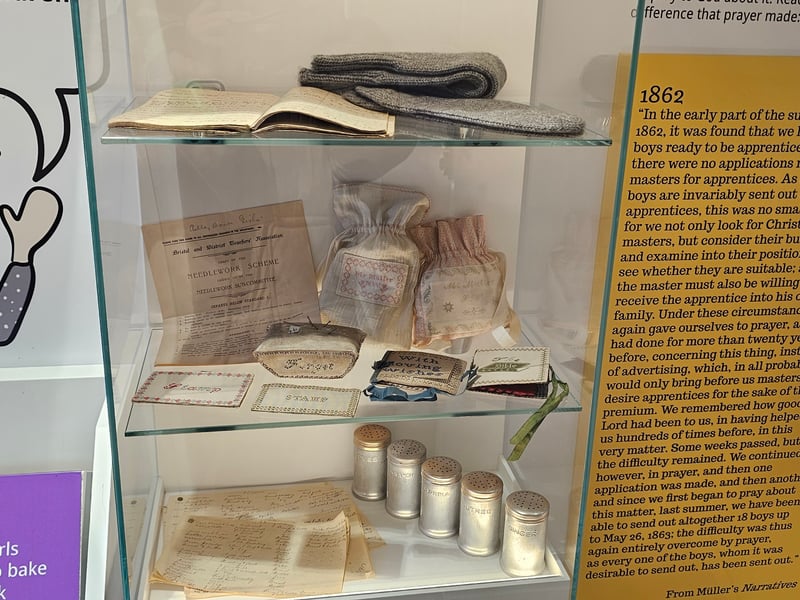
17. Training
By 1862, many boys were ready to be apprentices but training continued at the orphanage, with older girls taught how to cook and bake | adriana amor
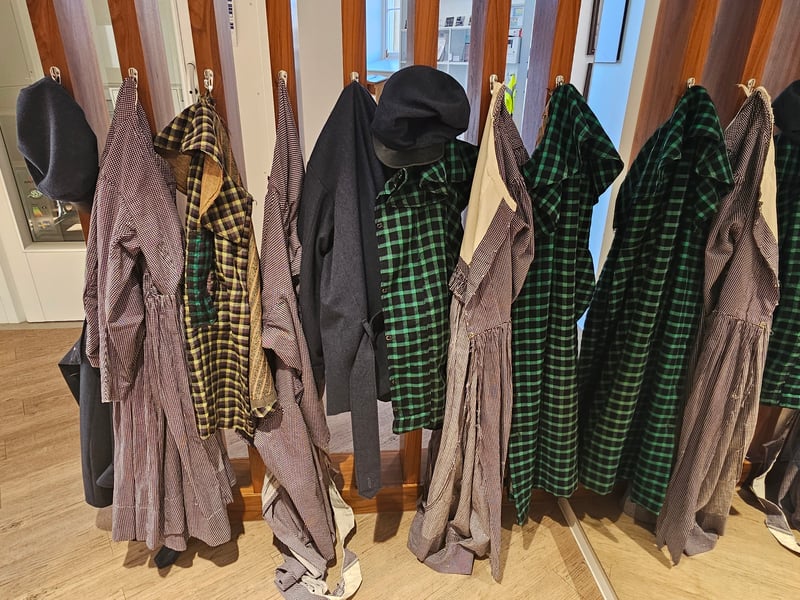
18. Try on the uniforms
In the third section of the museum, visitors are encouraged to try on replicas of the uniforms the children would have worn and take photos. | adriana amor
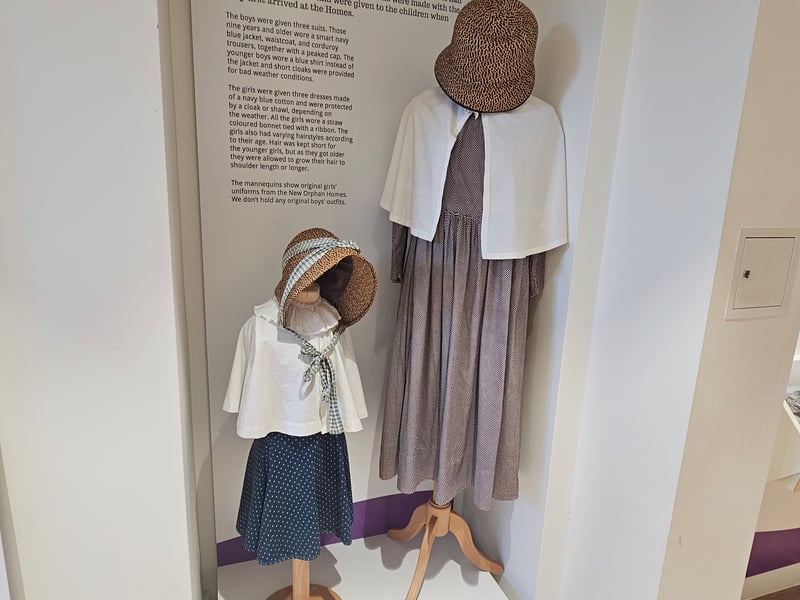
19. Uniforms
The children's daily uniforms were made with the help of the older girls and were given to the children when they first arrived at the Homes. Boys aged nine and older wore a smart navy blue jacket, waistcoat, and corduroy trousers together with a peaked cap, and younger boys wore a blue shirt instead of the jacket and short cloaks were provided for bad weather conditions. Girls wore navy blue cotton dresses and were protected by a cloak or shawl depending on the weather, as well as, a straw-coloured bonnet tied with a ribbon. Hairstyles varied according to age with young girls having short hair and as they got older, they were allowed to grow it to shoulder length or longer. | adriana amor