
We need cohesion, not division, says Bristol councillor amid council transgender fracas

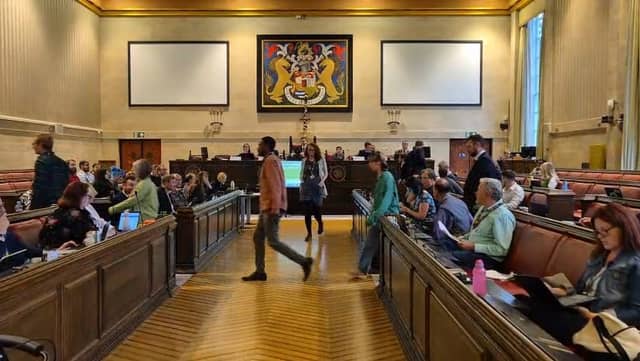

Several Green councillors walked out of the council chamber while hearing from gender critical activists talking about trans people.
Greens said members of the public were making offensive statements regarding claims such as trans women allegedly harassing cisgender lesbians. In April the Supreme Court ruled that the word “woman” in the Equality Act refers only to women who were born female.
This could lead to restrictions on trans women accessing female-only spaces, and Bristol City Council and other organisations are reviewing their policies. But in a full council meeting on Tuesday, September 9, campaigners criticised the council’s response to the Supreme Court ruling.
While they were speaking, Green councillors stood up and walked out of the room, waited outside until they finished, and then returned to their seats.
Katharine Rogers, one member of the public, said: “The council will need to review and update its policies and procedures, but it’s clear the response was made without consulting women other than those aligned with gender ideology. The idea that paternity services is a gender-neutral term, and the advocacy for phrases like ‘people who chestfeed’, raise huge concerns.”
The term ‘chestfeeding’ is sometimes used by trans and non-binary people, particularly those who have had top surgery to remove their breasts and might be able to still express milk to feed their baby. Another concern of campaigners was a lack of “spaces for lesbians to meet”, although specific examples of where problems have taken place were not given.
Elaine Hutton added: “Because of BCC’s failure to comply with the legal definition of sex, there are no longer any spaces for lesbians to meet. Lesbians suffer harassment from men identifying as women who claim the right to enter lesbian spaces in Bristol.”
Also speaking was Stephen McNamara, the council’s former top lawyer. He asked whether a women’s running club should admit a “six-foot-three trans woman with a beard”. This led to the lord mayor, Conservative Councillor Henry Michallat, telling him to be “mindful and respectful of colleagues across the council”, then followed by campaigners shouting from the public gallery.
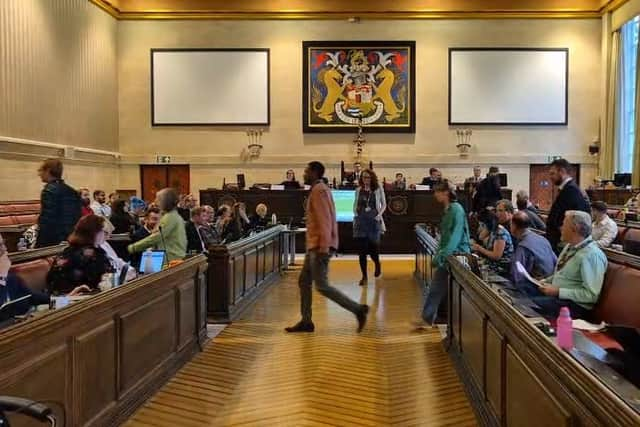
Green Cllr Heather Mack, deputy leader of the council, said: “At a time when we’re facing issues around community cohesion on many fronts in many ways, I must question the tone of these questions that are clearly intended to divide and hurt. I ask you to consider the pain experienced by young trans and questioning people, who would witness your questions.
“And I would perhaps ask that you reach out and talk to some people impacted. I ask you to consider the vulgar and offensive comments, especially around the ‘bearded’ comments, judging women and trans women on their conformity to beauty ideals.
“This has an impact on all women, especially those young and transitioning. If you really consider that facial hair is the issue that determines whether you should be in a female space or not a female space — then I would invite you to come up here and look at the hairs on my chin.”
“Deeply offensive and transphobic” comments from campaigners were also criticised by Labour. Cllr Tom Renhard, leader of the Labour group, said: “Respectful debate is fine. When it crosses the line, as it did tonight, it is not. We need to focus on fostering community cohesion, not stoking division.”
The comments sparked a wider row about who should be allowed to say what in a public council meeting. On the one hand, members of the public have the chance to tell the city’s politicians about problems and issues they are concerned about. But on the other hand, the council must legally take steps to prevent harassment and discrimination, including against trans people.
After the meeting, Green Cllr Ani Townsend said: “The council has legal obligations to staff outlined in the Equalities Act 2010 — e.g. to actively take reasonable steps to prevent harassment and discrimination. It is the lord mayor’s duty to rule out statements that conflict with this legal obligation — and may do so if questions are vexatious or offensive.
“This legal fact has repeatedly been made to the lord mayor in advance of the meeting to no avail. Therefore, Green councillors walked out of the chamber, our place of work which includes many trans colleagues, to make this point publicly.”
But Conservative Cllr Mark Weston, leader of the Tory group, backed the lord mayor, saying that he tried to “allow everyone an opportunity to air their views”. The lord mayor plays a ceremonial role similar to the speaker in the House of Commons, such as chairing full council meetings. Councillors are chosen to act as lord mayor for a year.
Cllr Weston said: “The ultimate authority for the admissibility of public forum matters rests with legal officers. While the lord mayor could have ruled out these submissions, they fell within the normal ambit of reasonable statements, questions and expressions of opinion. Criticism of ideas is not hatred and to suggest otherwise is intellectually dishonest.
“It would not be proper to simply rule out critical or contrasting beliefs about which one can honestly and reasonably disagree. Clearly, any such expressions have to conform to appropriate norms of courtesy when they come to be debated. In this instance, the lord mayor sought to uphold freedom of speech — a difficult balancing act when dealing with controversial issues — so long as this right remained within the confines of acceptable behaviour.
“When contributions made by members in the public gallery were deemed to have overstepped this mark, he quickly and decisively shut them down. I support his judgement in trying to allow everyone to have an opportunity to air their views. That is how a healthy democracy works.”