
'We could have communicated more clearly' admits council after calling bollard 'modal filter'

The East Bristol Liveable Neighbourhood trial could have been communicated more clearly according to new research that raises concerns about transparency.
Ahead of rolling out a second trial in South Bristol, the research highlights what went wrong with the first trial. Staff at Bristol City Council often used confusing and vague language to describe the plans for the liveable neighbourhood, such as a “modal filter” to describe a bollard.
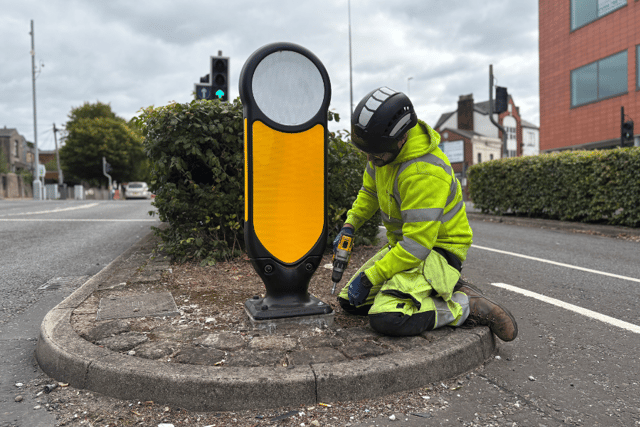

Some local residents in Barton Hill previously said they misunderstood what the scheme was actually about at first. Inconsistent numbers in public documents also damaged the trust of local residents in the council, researchers found.
A review of how staff spoke to residents about the trail was carried out by a public health expert working for the council, suggesting ways they could improve too. The report said: “Communication clarity could be improved.
“Vague feedback responses and unclear connections between feedback and resultant changes to plans reduced accessibility and transparency. Some outreach was too close to implementation to be optimally impactful. Inconsistencies in figures across documents could erode trust.”
Covering a wide area of Barton Hill, Redfield and St George, the East Bristol Liveable Neighbourhood aims to reduce traffic driving through the area, making streets safer to walk and cycle along. Bollards, planters and bus gates have been installed across the area, with some residents supporting the scheme and others opposing the changes.
The research also found strengths in how the scheme was rolled out. Council staff spoke with residents over two years, and produced videos and maps and held travel planning sessions. Documents were also translated into different languages, given the diversity of the population.
But another flaw was how wide the trial area covers. Barton Hill is very different from St George, and there appeared to be many more opponents in the more deprived Barton Hill and many more supporters in the more affluent St George. The review found that “simple schemes in smaller, more homogeneous communities may also be easier to implement successfully”.
The review suggested “transparent and responsive communications”, with regular public updates. And liveable neighbourhood schemes should be rolled out in areas with the most public support for them. The next trial, the South Bristol Liveable Neighbourhood, is due to cover a wide area including Windmill Hill, Bedminster, Southville and Ashton Vale.
Around 100 liveable neighbourhood schemes are scattered across England, which are sometimes called low traffic neighbourhoods elsewhere. Last year a report from the Department for Transport found that 11 schemes have been removed after their installation, including one in Exeter, due to local opposition.
Councils across the country have similar goals to get more people walking, cycling and using public transport, and fewer people driving cars. This is due to concerns about air pollution and congestion. But many people struggle to walk or cycle long distances and public transport is often poor quality, so the car can often be the most convenient and reliable way to get around.
Disabled people in particular have been vocal critics of the East Bristol Liveable Neighbourhood. They previously said that they need to drive to get around, and restricting their ability to do so means that they feel cut off from society. The research found similar problems with other schemes elsewhere. And long queues of cars have sprung up, such as on Blackswarth Road.
The report said: “Across the UK, not engaging with disabilities groups early and sufficiently was common. This led to frustration and misunderstanding. The short-term impact of liveable neighbourhoods on active travel and traffic reduction is also unclear. Emergency services and disability groups are key stakeholders in terms of influence to potentially close a scheme.”
Protests blocking the installation of bus gates in Barton Hill were led by disabled residents. These successfully delayed the roll out of the trial for a few weeks, until council contractors turned up in the middle of the night, flanked by police officers, to finish the job. This led to widespread criticism of a “heavy-handed” approach to dealing with public opposition.
Green Councillor Ed Plowden, chair of the transport policy committee, said: “We want Bristol to be a place where our neighbourhoods are safe, healthy, inclusive, and attractive places where everyone can breathe clean air, have access to green spaces, and feel a part of a community. This ambition can only be achieved through the involvement of communities in all phases of designing and delivering current and future schemes to bring about positive change for people.
“This is why we commissioned this rapid review over the summer so we could absorb and embed any learning into the next phase of the South Bristol Liveable Neighbourhood scheme, and indeed all the work we do to try and improve our city.
“It’s right that the people of Bristol should expect high standards in how we deliver these schemes. By constantly self-reflecting and learning from our experiences and those of other cities, we hope we can earn the trust of communities and meet their expectations.”
Early designs for the South Bristol Liveable Neighbourhood are due to be revealed imminently. The council will consult local residents about these designs, following a previous consultation asking people to place on a map what problems there were with traffic in the wider area. The top three issues were speeding traffic, problems with car parking, and a lack of safety for cyclists.