
Tackling Bristol’s housing crisis, traffic congestion and public transport among leader’s hopes for 2026

Tackling the city’s housing crisis and terrible congestion will be high up in the priority for 2026 for the leader of Bristol City Council. Green Councillor Tony Dyer said several major regeneration projects will take a step forward this year, delivering many new homes and places to work.
Upgrading public transport and repairing vital bridges will also be a key focus over the next 12 months. And throughout 2025 the politician leading the council said that public services in Bristol have started to show signs of improvement, including for the city’s most vulnerable.
In an interview with the Local Democracy Reporting Service, Cllr Dyer said that his proudest achievement this year was the council setting a balanced budget back in February. Particularly with the new cross-party approach, this involves a lot of weighing up of complicated priorities and competing interests, eventually setting out how hundreds of millions of pounds are spent.

He said: “It’s taking a lot of hard work but we’re turning around some of the areas that weren’t performing as well as they perhaps should have been, like children’s services, adult social care, temporary accommodation, planning, and looking after the state of our housing stock. We’ve made significant improvements in all of those areas and we’re well under way to getting where we need to be as a council, looking after those core services.”
Caring for disabled and elderly people, and vulnerable children, takes up a huge amount of the council’s annual budget, but is often hidden from sight from the majority of the public. But both of these services are regulated by watchdogs, which recently found they have been improving. Another improving area is how the council works with other bodies, like the Parent Carer Forum.
Three years ago a scandal erupted after the council tried to cut funding for the forum, in a row that led to claims of staff spying on the social media of parents of disabled children. Since then, Cllr Dyer said the relationship has improved. “It’s now much better, more collaborative and a more appreciative way of working. That’s probably why it’s not getting covered,” he added.
A more recent row has focused on potential cuts to grants for creative groups. Among the voices opposing the cuts were Aardman, Watershed, Bristol Beacon, the Old Vic, and the Arnolfini. The Cultural Investment Programme could be shrank, with critics saying support is “woefully insufficient”. But Cllr Dyer said budget pressures are affecting all parts of the council.
“The hardest decisions are where you’re having to make a choice between two things, both of which are worthwhile, but you can’t do them all. For instance, I would say having to put forward proposals for reductions in our Bristol Impact Fund or the Cultural Investment Programme. Those are areas in which we do want to invest more in, but we have to set a balanced budget.
“It wouldn’t be fair on other parts of the council if we didn’t include those areas simply because they might generate bad headlines. I’m not going to pretend that the financial situation is one that doesn’t keep me awake at night, because we still have a fundamental problem with the way local government is financed. Many councils are struggling even more than they were last year.
“We’ve gone the other way. Our financial situation is better than it was last year. There are a number of reasons for that. To be fair to the new government, we have had some increases in funding. However the increases in funding are still far shorter than the increases in costs, so that’s why we’re still having to make reductions in some of our spending areas.”
Adding to these pressures is the rising number of people needing support. This includes children with special educational needs and disabilities, which is causing financial problems for councils across the country, as well as the increasing number of disabled adults needing care. Councils have a legal duty to provide support to people who need help, despite growing costs.
Tens of thousands of Bristolians live in homes owned by the council, and many of these homes are in shocking condition. Shortly after the Greens took control in 2024, the Regulator of Social Housing raised concerns about the state of council homes in Bristol. This led to an overhaul in the focus away from building new council housing and towards improving the existing homes.
Admitting he was “very boring”, Cllr Dyer said his number one priority for the coming year was again setting a balanced budget. Elsewhere, lots of new housing developments should make progress, particularly in two huge regeneration projects: Temple Quarter and Western Harbour. The hope is that increasing the number of new homes built reduces pressure on housing costs.
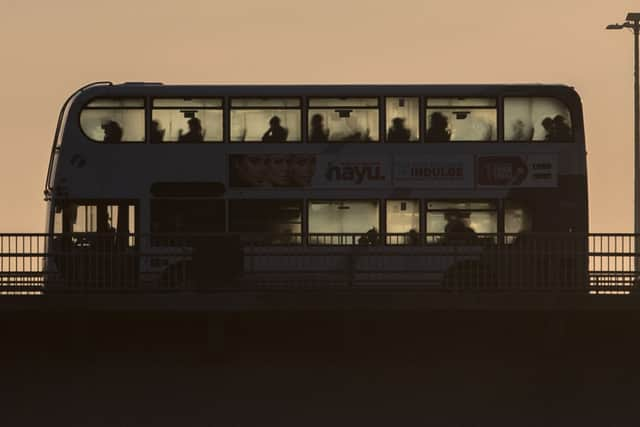
Lots of transport projects will take a major step forward too, over the next 12 months. While this will mean even more streets are covered in roadworks in the short term, in the longer run getting around the city should become easier, especially for those walking, cycling and getting the bus.
“Nobody’s happy with Bristol’s transport system”, Cllr Dyer said, “and we know we need to do something to fix that. Some of that is going to require us rebalancing the transport systems so that we can improve the quality of the public transport offer.”
Making bin collections more reliable is another priority, as well as addressing the threat of climate change. This will include setting out a flood defence strategy, partly because Bristol is expected to suffer from rising sea levels. How this will be funded has not yet been figured out. Major repairs will continue for ageing bridges and harbour walls, avoiding catastrophic collapse.
“It’s annoying when you have roadworks,” he added. “But those roadworks are necessary. We’re not going around thinking ‘where should we put roadworks just to annoy people’. What would be worse is if we didn’t do the repairs, because then the disruption to people’s travel would be infinitely worse because of the permanent change.
“We wouldn’t be able to access the funding to repair the damage, rather than preventing the damage. We’re looking at needing to find something like an additional £10 million a year just for some of the key infrastructure. We’re going to have to work closely with the West of England Combined Authority and the government on accessing that additional funding.”
A few years ago, rows between the council and the West of England were common. But recently the collaboration has been much closer and the relationships more cordial. While this is partly due to a different cast of politicians at the top table, another reason is the switch in 2024 from a mayor running the council to eight policy committees made up of councillors in different parties.
Cllr Dyer said: “However much others may want to argue, it does encourage much more collaborative working. The overwhelming majority of decisions going through the committees are approved unanimously. There’s only a relatively small percentage that tends to create the sparks and friction between different members of the committees.
“But it’s taken a period of adjustment. We had the mayoral model since 2012 and that encouraged a particular way of working which was quite centralised by its very nature. Moving to a model of governance, that’s almost the complete antithesis of that, has required a period of adjustment.
“I still get a lot of people coming into my office and a lot of the time it’s me redirecting them back and saying ‘actually that decision-making power is through that committee, not mine as leader of the council’. There’s a lot of areas where people assume the council is responsible, but it turns out it’s the Highways Agency, the NHS or some other organisation.”
Another “key objective” is sharing the benefits of investment in Bristol across the more deprived parts of the city, such as Hartcliffe. The government recently announced £20 million would be spent on the neighbourhood over the next decade. And the new Youth Zone, a large youth club, is due to open in the spring, on the border between Hartcliffe and Knowle West.
“It won’t happen overnight”, he added. “But it’s a massive opportunity for us to demonstrate that investing in areas like Hartcliffe, in a way that benefits the local community, is both doable and necessary.”