
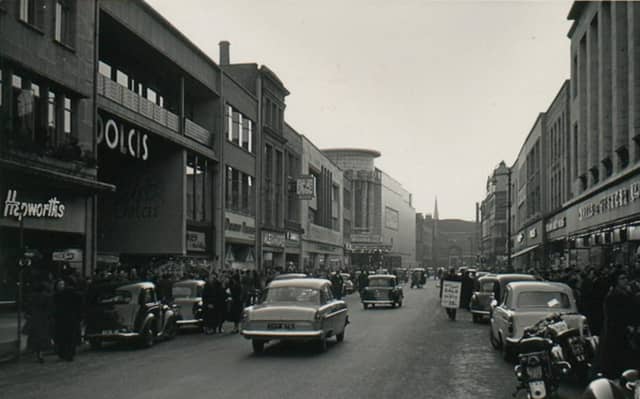


In the years following the Second World War, many major cities were left to clean up the wastelands which once were high streets before the Blitz.
Bristol’s then shopping district of Castle Street and Wine Street was left in ruins. A decision was made to designate the Broadmead area the city’s main shopping district - this meant plenty of construction work to attract shoppers. Throughout the early 1950s, the existing Broadmead, running between Union Street and Merchant Street was extended to include the former Rosemary Street.
During that decade, and the following 60s and 70s, a host of buildings and stores were introduced into the area to create a thriving shopping district. Later, in the 1980s, some of these structures were destroyed in order to make way for the Galleries shopping centre and the Broadmead would eventually become pedestrianised. Although, much of the architecture and original Broadmead is still standing, and in use, today as well as some prominent features which pre-date the 50s, such as the Odeon Cinema.
Bristol World has rifled through picture archives to pull up 22 pictures highlighting how the area was transformed to create a shopping district fit for a city looking to flourish in post-war England. Join us for a trip down memory lane as we look at photographs showcasing Broadmead during the 1950s, 60s and 70s.
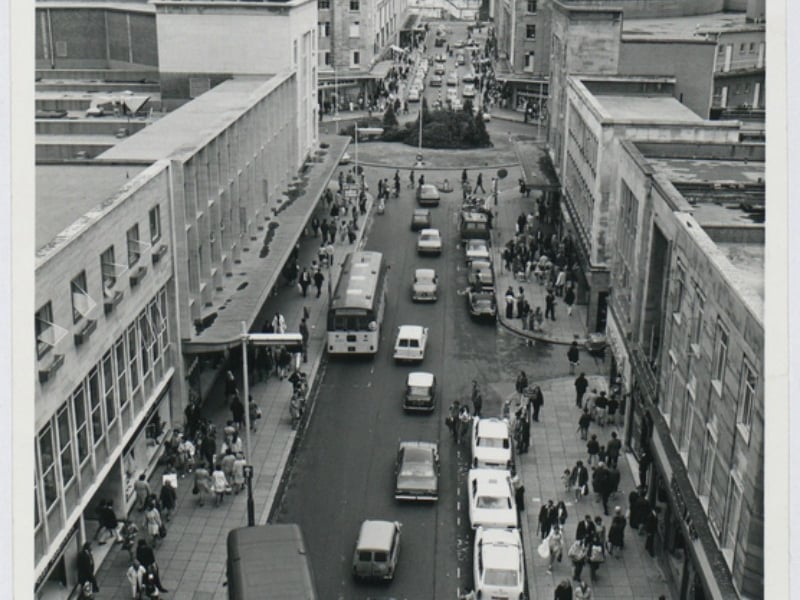
9. View from above, 1971
Merchant Street looking towards Fairfax House and Broad Weir | Archives Bristol
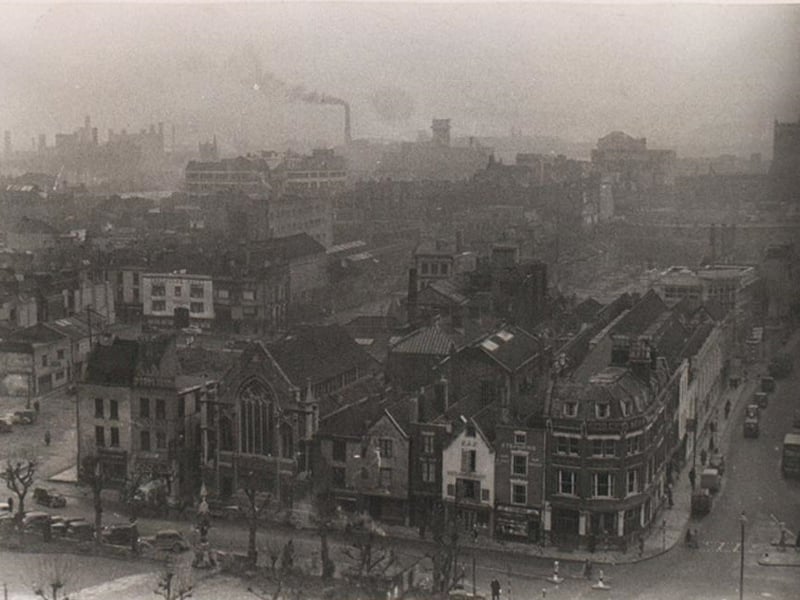
10. Union Street / Horsefair, 1951
Shops and the Haymarket Hotel (large corner site at junction of Union Street and Horsefair) looking towards the Horsefair from rooftop level, with a glimpse of St James’ Churchyard in the foreground. | Archives Bristol
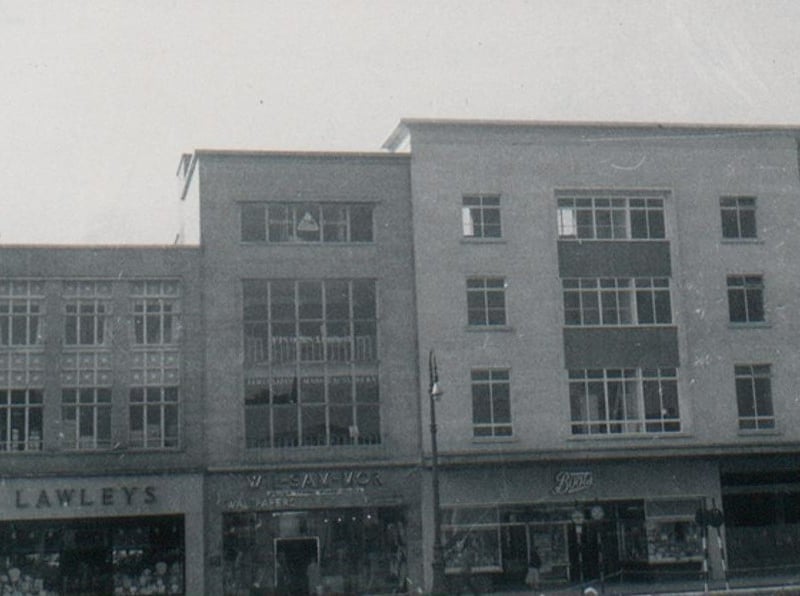
11. Boots, 1955
Broadmead’s Boots store shortly after its opening in 1955. | Archives Bristol
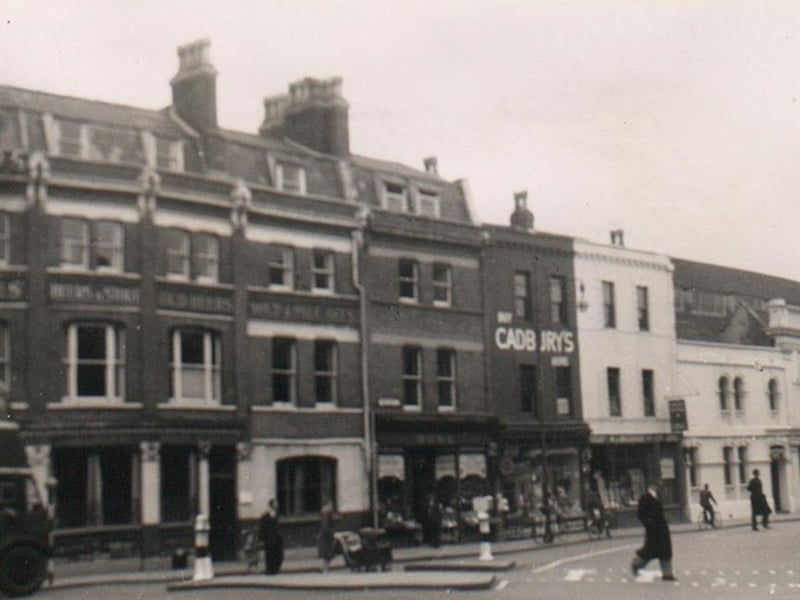
12. Haymarket Hotel, 1950s
Shops and Haymarket Hotel (large corner site at junction of Union Street and Horsefair). | Archives Bristol