
How Bristol region’s economy could change over next decade with ‘72,000 new jobs’

Over the next decade the West of England’s regional economy could add an extra 72,000 jobs across a few key sectors.
The region’s leading politicians hope the economy will grow by a huge 28 per cent in 10 years, with thousands of new homes, better public transport and education.
Growing sectors include advanced manufacturing, digital and technologies, clean energy, and creative industries. Since 2014 there was a 52 per cent growth in digital and tech jobs and 82 per cent in creative jobs. Investors could help fund the growth of jobs in AI, cyber security, offshore wind, nuclear energy, aerospace, autonomous vehicles, and film and television.

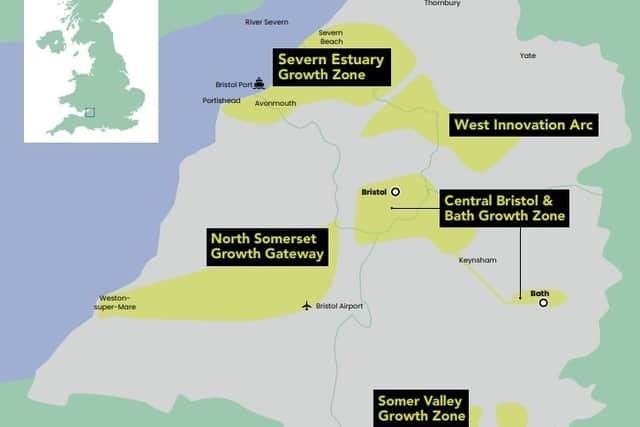
A few areas will get extra focus as “growth zones”, such as the middle of Bristol and Bath, the Severnside industrial area, the Somer Valley including Midsomer Norton and Radstock, the “West Innovation Arc” which includes the new Brabazon district and Bristol’s North Fringe, and the North Somerset Growth Gateway between Weston-super-Mare and Bristol Airport.
Helen Godwin, the Labour mayor of the West of England, said economic growth would “improve the lives of people across the region”. Her new growth strategy, a sprawling and ambitious 120-page document, was approved by the combined authority on Friday, October 17.
The mayor said: “Growth can sometimes feel abstract and a long way from everyday life. But our strategy is proudly straightforward. It’s about ensuring everyone, particularly young people, can see a pathway into work for the careers that they want and the jobs that we need.”
As well as the 72,000 jobs, 135 megawatts of clean energy generation will be installed, and an average of 7,750 homes will be built every year. The region’s gross domestic product could allegedly grow by 28 per cent over the next decade.
At the heart of the region’s economy is an area recently rebranded as the West Innovation Arc. This includes Bristol’s North Fringe as well as the area planned for the former Filton Airfield, home to aerospace and defence industries, the Ministry of Defence, the University of the West of England, and the Bristol and Bath Science Park.
Thousands of new homes are planned for the Filton Airfield, an area which will be called Brabazon, as well as the new YTL Arena, offices and space for research and development. Two new train stations are planned, and a potential mass transit route leading to the science park.
Central Bristol and Bath will be another focus, particularly given the universities and creative industries. This includes the Bristol Temple Quarter regeneration, including the University of Bristol’s new Enterprise Campus, and the Bath Riverside Innovation District as well. Examples of growing industries in the two city centres include bioengineering and quantum computing.
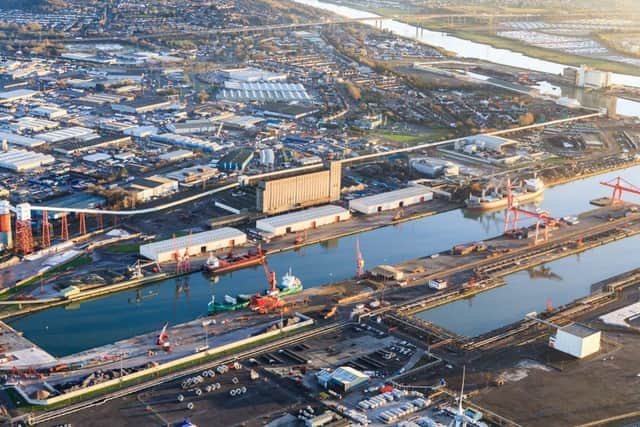
Along the coast of the Severn Estuary the focus will be on energy, freight and industry. This includes nuclear energy at Oldbury, floating offshore wind and potentially tidal power. Although tidal power has long been discussed with little action so far, the West of England is working with the Cardiff Capital Region to try and finally get tidal energy generation off the ground.
Stretching from Weston-super-Mare to Long Ashton and Bristol Airport is the North Somerset Growth Gateway. This will see the healthcare technology company Epic build a huge campus at Long Ashton, as well as the growing enterprise area at Junction 21 of the M5. North Somerset could soon join the combined authority, and Weston’s population is rapidly growing.
Liberal Democrat Cllr Mike Bell, leader of North Somerset Council, said: “We need to start reframing the vision of Weston-super-Mare not as this Victorian seaside resort, but actually as a city by the sea with a big, educated, increasingly younger population who are looking for people to come and invest and help grow our economy.”
The former mining towns of Midsomer Norton and Radstock in the Somer Valley will benefit from transport investment to better connect the area to the rest of the region. A new enterprise zone will be built west of Norton, although this has proven unpopular with some locals. And an innovative project will use water from former mines to provide heating for local businesses.
Liberal Democrat Cllr Sarah Warren, deputy leader of Bath and North East Somerset Council, said: “This project can take infrastructure from our industrial heritage and use it to contribute to our low-carbon future. It has revealed real potential to use the heat from mines under the Somer Valley to create a low-carbon heat network at the Somer Valley Enterprise Zone.”
Two main obstacles holding back the region’s economy are terrible congestion and high housing costs. Getting around via driving or public transport often takes longer than perhaps should be necessary due to frequent traffic jams and unreliable buses and trains, while both Bristol and Bath have some of the most expensive housing in the country outside of London.
This means many people are left spending a lot of unproductive time stuck in traffic or on public transport, and spending a lot of their money on mortgages or rent instead of supporting local businesses. As well as building a mass transit network, the West of England will try to draw up a regional housing plan — but the first two attempts at this failed under former mayor Dan Norris.
Green Cllr Tony Dyer, leader of Bristol City Council, said: “Mass transit will be absolutely essential to regional growth, whatever it may look like. We have connectivity issues in several parts of the region. But if we can introduce a transit system that addresses these inequalities and boosts economic inclusive growth, that would be a win for people and the economy.”