
Connecting communities in diverse Bristol neighbourhood and fighting social isolation

Over the last decade an inspiring research project has helped connect communities in a diverse Bristol neighbourhood and tackle social isolation.
Barton Hill is a disadvantaged part of the city east of Temple Meads and home to people from lots of different places, including many Somalis. Despite its challenges, volunteers in Barton Hill have worked hard to build bridges in the neighbourhood, including with a popular after-school club.

This work has gone alongside research looking at the difference between raising children in places like Somalia and England. The area is home to several large tower blocks of flats owned by Bristol City Council, which was urged to support the community-building work.
Councillors on the children and young people policy committee heard about the Find Your Village research project on Thursday, August 28. Tom Allport, a paediatrician and researcher at the University of Bristol, said: “What is it like if you come from a culture where it takes a village to raise a child here in our atomised, fragmented society?
“There are quite a lot of challenges along the way.”
He mentioned a family with three children, who had moved between three tower blocks in different parts of Bristol. The first two children struggled with their development, and the parents felt isolated. One play park near the second tower block lacked a gate, and there were concerns about safety given news at the time of a recent abduction.
Then in the third block, in Redcliffe, there was communal space and they got to know their neighbours. A nearby play park there also had a gate, and the neighbours would take it in turns to take the children to the park while the parents had some down time. The third child “developed typically”, and the father told the doctor about how much their homes had an effect.
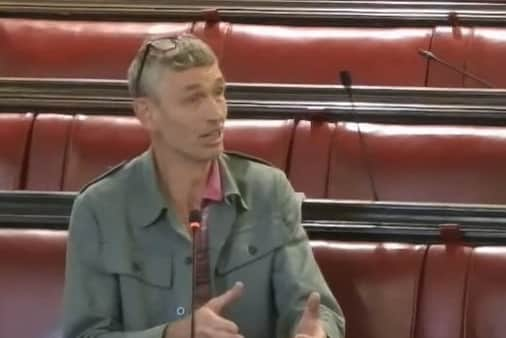
Dr Allport added: “The dad’s story was really clear that where we live matters hugely for how our children grow up. The emerging understanding of how pregnancy and early life sets the scene for children’s development really fits with that. It’s just one example, but it tells a lot of the story.”
Samira Musse lives in Corbett House in Barton Hill and is one of the co-founders and directors of Barton Hill Activity Club. Over the last few years she has worked with Dr Allport on the ‘Find Your Village’ project in Barton Hill and the surrounding area, which sparked the idea for setting up the club.
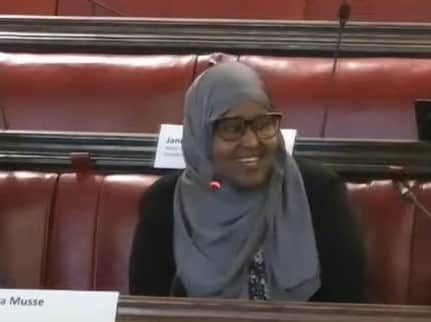
Activities include trips outside of Bristol, cooking sessions and coffee mornings. She said: “I’m from a place where it takes a village to raise a child. We just used to go out and play with other children and interact with the community. When he came up with the idea, I was like this is exactly what our children need.
“Off the back of that, we set up the Activity Club in 2018 and we have around 2,000 members now. The community feels more connected. Before that we didn’t have any connections with anyone else.
“I used to take my children to the children’s centre, and then we moved from that to school, and it was just you and your child — no community connection, no children playing outside in parks.
“We need as a city to look after our children, it doesn’t matter what colour or background. We give opportunities to mothers from pregnancies to children growing up. We have a coffee morning where parents can come with a form and say ‘I need help with my child’s university application’.”
Recently Barton Hill Urban Park and Newtown Park were invested in by the council, and there are plans to invest in Netham Park too. The research project has also explored how a connected community leads to people helping each other out, such as with translating in bureaucratic and confusing appointments, or helping lost children find their way back home.
Dr Allport said: “If you’ve got a government agency that you don’t know about, someone will go with you and help translate that agency in a way that makes sense to you. That transforms the sense of ‘I don’t get this’, to ‘I can handle this’.
“Children’s freedom to roam has reduced dramatically in recent generations. In communities where children can still play out, if they get lost someone will take them home. There’s a shared confidence — and as host communities there’s a huge amount we can reclaim about more communal, collective childhoods and parenting.”
But there are obstacles in forming a sense of community among neighbours. At the bottom of council tower blocks are often community rooms, however during the pandemic the keys were taken away. Residents are hoping to get keys from the council themselves, to be able to use them more often, and without having to book weeks in advance and only during working hours.
Funding for community groups often goes a long way, but the money is usually given in short term contracts and the application process can be daunting. This can include the need for evaluations and questionnaires, putting off some people from applying, according to Dr Allport. And online public consultations, carried out by the council, can also be hard to understand.
Green Councillor Shona Jemphrey, who represents Lawrence Hill, said: “When there’s so much racist rhetoric flying around the country, it’s important to remember and commit to this sense of community. On the community rooms, there are fire risk assessments that need to be updated and electrical equipment PAT-tested. We should be getting an update on that imminently.”
Local community leaders also took part in a focus group last year, with the results published in a report ahead of the children’s policy committee. This echoed how groups of people from different backgrounds live side by side in Barton Hill and look out for each other.
Adam said: “We are multiple cultures in Barton Hill. We are a majority Somalian, but there are many others: Sudanese, Yemeni, English. I think other communities can learn from Barton Hill how to live with different cultures and be integrated without any problems.”
Fowsio added: “You feel the sense of people helping each other. I’ve lived in different areas of Bristol, but it’s the first time I felt at home in Barton Hill. People are helping each other and saying hello to each other, whether they know each other or not.”