
Bristol: Horses banned from damaged Pero's Bridge because of romantic couples' love padlocks


Police officers will be banned from riding horses on a bridge in the city centre due to new weight restrictions.
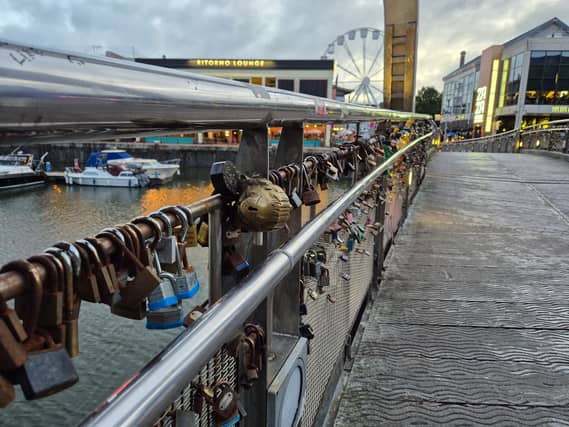
Pero’s Bridge is “currently inoperable” due to damage from thousands of padlocks which couples attached to the railings as a romantic symbol.
The footbridge connects Queen Square with Millennium Square and was named after Pero Jones, who was enslaved and lived in Bristol. Many people said the love locks were inappropriate on the bridge, given its link to slavery, and earlier this year Bristol City Council bosses also said they weighed too much.

The locks are being removed and next year repairs are planned. The bridge is supposed to be able to lift up to allow boats through, but this can’t happen at the moment due to the damage. A new weight limit means that no police horses will be allowed to ride over the bridge.
Police horses are a common sight in the city centre on busy event days, with piles of manure left on pavements, bike lanes and roads an even more common sight. Councillors on the harbour committee will discuss the problems with Pero’s Bridge on Tuesday, September 23.
A committee report said: “Harbour Authority staff have been working to remove the thousands of locks attached to Pero’s Bridge. This action follows concerns raised by BCC engineers that the cumulative weight of the locks places additional load on the structure — something not accounted for in the original design.
“This has resulted in rendering the bridge inoperable and the Bridges and Structures team have issued a no-lift order. The removed locks will be retained, and we are working with the Arts Development Teams to investigate the possibility of creating a public installation nearby that incorporates them.”
Plans to remove the locks from the bridge were first revealed in June, when one council boss claimed they weighed three tonnes. The practice of attaching love locks to bridges has spread to many cities across the world, with couples then throwing keys into the water below.
Other cities have also taken steps to stop couples damaging bridges with padlocks, too. Once all the locks have been removed, harbour staff will check for any new locks and remove them as part of their weekly maintenance regime. While some of the padlocks have been removed, with workers spotted there last month, many locks still remain on the bridge.
Councillors on the economy and skills policy committee are expected to approve spending £200,000 on emergency investigation works on Monday, September 22. Restrictions include stopping loads over one tonne from using the bridge, such as police horses.