
Moth sets new quantum data encoding record



Quantum computing company Moth has unveiled a new data encoding method that successfully stored and recovered more information on a quantum processor than previously reported, a development that could support advances in quantum machine learning and scientific research.
Quantum computing company Moth has announced a new data encoding method that it says has set a record for the amount of information successfully encoded and read back from a quantum computer. Known as Tessa, the technology was developed to address one of the key challenges facing quantum computing: efficiently loading data onto quantum processors while maintaining accuracy.
Encoding is a fundamental part of computing, allowing information to be stored, processed and retrieved. In quantum computing, however, the process is significantly more complex because today's machines lack the equivalent of the memory systems used in classical computers and are highly sensitive to noise. Moth said its new method encoded 1,568 numerical values across all 120 qubits of an IBM Quantum Nighthawk r2 processor before successfully recovering the data. According to the company, the largest previously reported experiment of this type recovered 128 values.
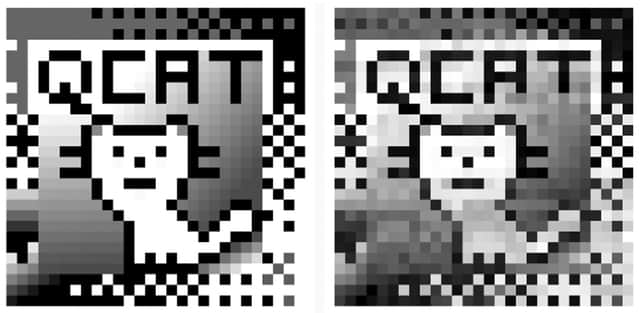
The technology can be used with any information that can be represented as numerical data. As part of its research, Moth used Tessa to encode images as well as DNA and protein sequences, including p53, a protein often referred to as the "guardian of the genome" because of its role in cancer prevention. The company said the breakthrough could have implications for fields including quantum machine learning, pharmaceuticals, life sciences and biological research, where the ability to process complex datasets efficiently is seen as a major opportunity for future quantum systems.
Daniel Bultrini, the Moth researcher who developed Tessa, said: "Every quantum computer has to get data in before it can do anything useful with it, and that step has been a bottleneck for fields like quantum machine learning. Tessa makes the most of the chip's capabilities, so the whole processor can be put to work at once."
Moth said advances in quantum hardware, alongside improvements in data encoding, are helping move the industry closer to practical commercial applications.
The company, which develops quantum applications for sectors including gaming, visual media and music, said encoding technologies such as Tessa form a key foundation for future tools that combine quantum computing and artificial intelligence.
Harry Kumar, founder and chief commercial officer of Moth, said: "The quantum applications that will have the greatest impact, including those that work closely with AI, will depend on breakthroughs such as Tessa in order to meet the expectations that have been set."
Moth's research paper, "Encoding Classical Data Across an Entire Quantum Processor", has been published on the scientific repository arXiv, while an image-processing version of Tessa is available through the company's Atlas platform.