
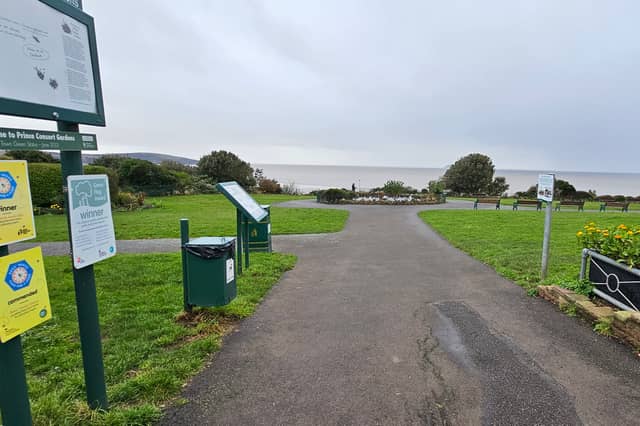

Located by the seafront of Weston-Super-Mare by Upper Kewstoke Road, Prince Consort Gardens dates back to the Victorian era.
Before 1862, the area was known as Flag Staff Hill, was owned by the Smyth-Pigott family, was used as a point of navigation for passing ships, and was enjoyed by locals for walks.
In 1862, John Hugh Smyth-Pigott enclosed the hill and created Prince Consort Gardens, named after Prince Albert, and charged for entry amid much public protest. The meandering footpaths, ornamental planting and ponds which can be seen today were created during the re-design.
In 1882, the gardens were offered to the town by Cecil Hugh Smyth-Pigott after the family's estate had stagnated, with the provision that the Smyth-Pigott estate would retain the rights to the sand from the seafront during the Seafront Improvement Scheme. The band shelter was added, the transfer to the Town was completed on the 31st of May 1893, and the park was opened to the public by 1895.
Nowadays, the park is tended by the Friends of Prince Consort Gardens in collaboration with the North Somerset Council.
Here are 20 photos from our visit to Prince Consort Gardens:
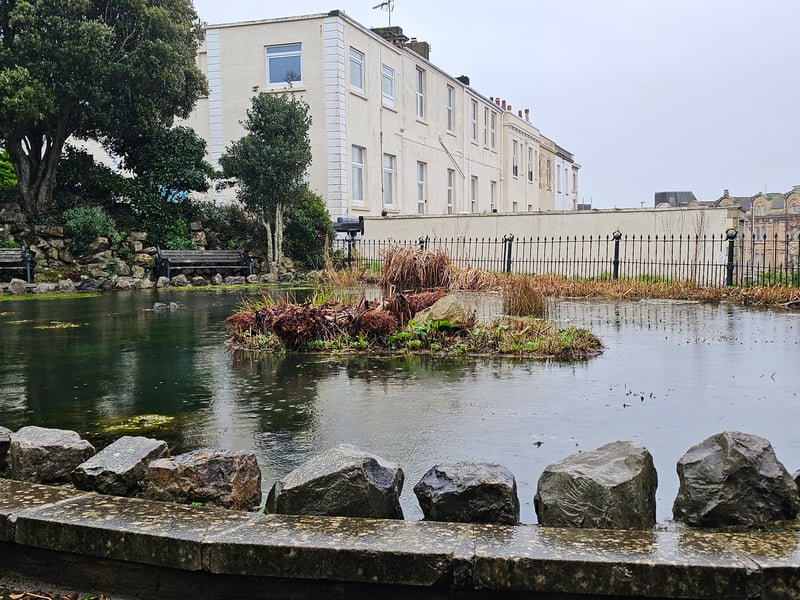
9. Wildlife Pond
After the friends of Prince Consort raised over £12,000 in 2018, the underused boating pond was converted into a wildlife pond with a design that took reference from the original pre-1960s Victorian pond. | National World
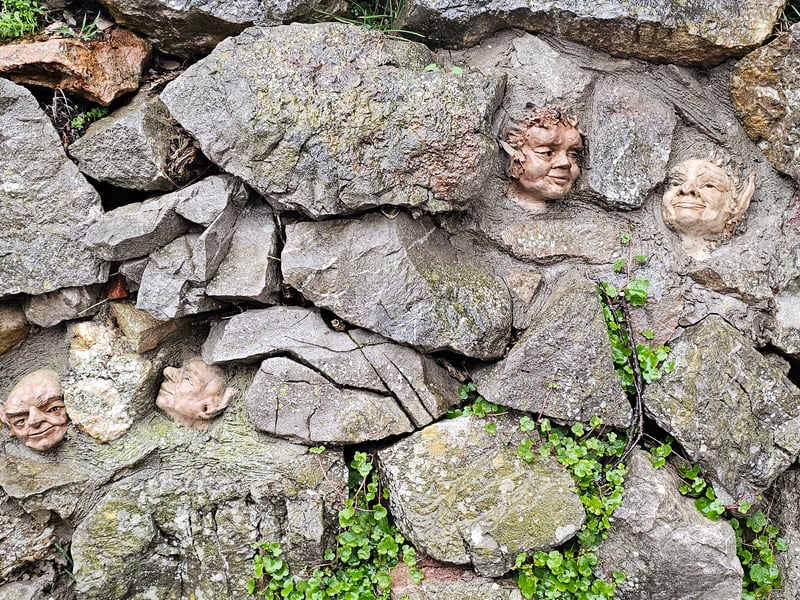
10. Head Sculptures
Nestled along the wall by the wildlife pond, the head sculptures were made by Lynda Hayles as part of a final-year art project. | National World
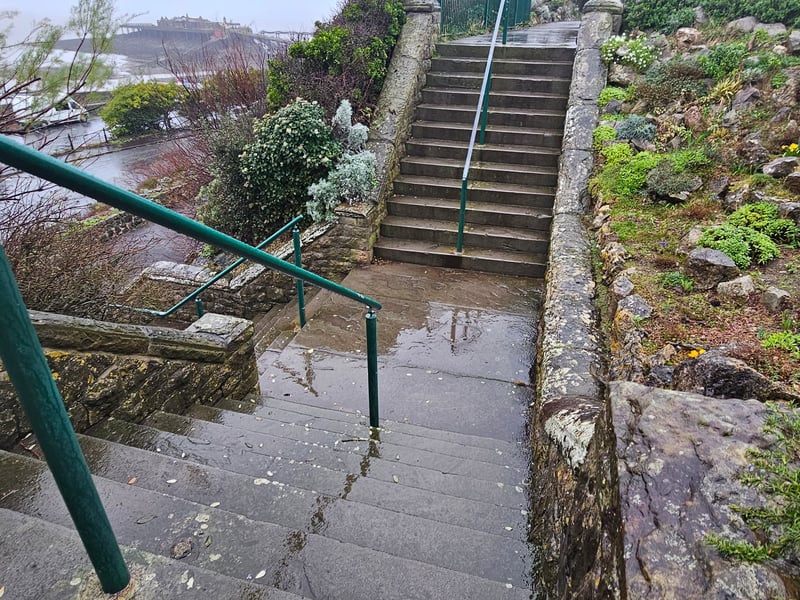
11. Steps
The steps near the wildlife pond lead down to Birkbeck Road and the path to the Victorian Shelter. | National World
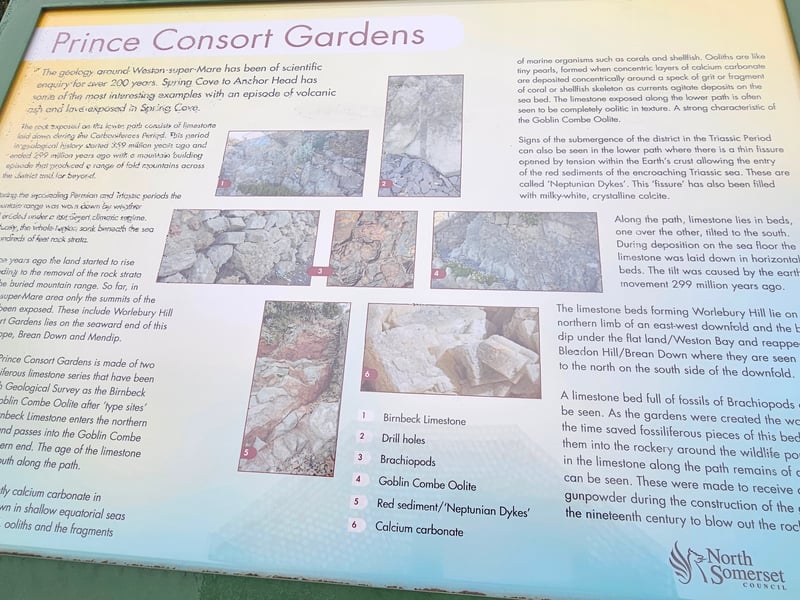
12. Geology
The cliffside is a site of geological interest, as expressed on the information board by Birnbeck Road. It is made of two carboniferous limestones: Birnbeck from the north of the path and Goblin Combe Oolite towards the southern end. | National World