
Is this how homes of the future could look in 2050?
From drone security systems to properties that generate their own electricity with near-zero carbon footprints, is this how our homes could look in the future?
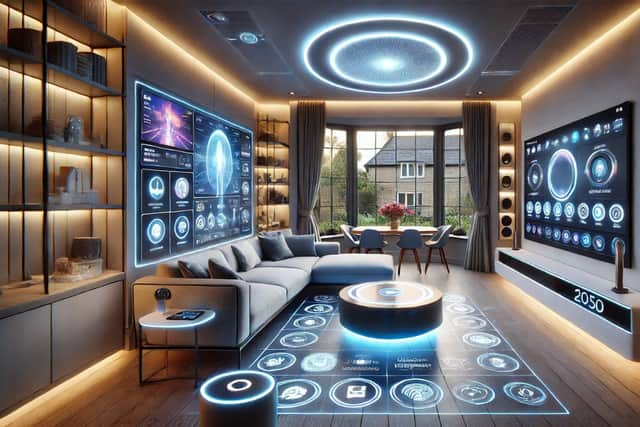

Housebuilder Avant Homes North East, which is based in Sunderland, has used AI to visualise how the average UK home could look 25 years in the future in 2050.
The AI predictions reveal a predicted transformation in the way we live, combining sci-fi-style tech with sustainable and intelligent home design.
AI predicted eight new home features including:
*Holographic and robotic home assistants and augmented reality (AR): Interactive, real-time 3D projections for managing household tasks, entertainment and security while AR will revolutionise home entertainment and shopping
*Drone security systems: AI-controlled drones will provide real-time surveillance for homeowners able to sense and react to movement
*Vertical gardens: Self-sustaining, AI-managed green walls that enhance air quality, grow food and bring nature into the home
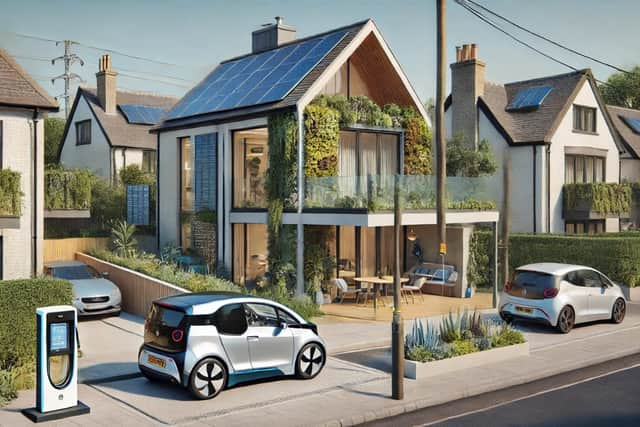
*Wireless EV charging: Built-in charging points that make powering electric vehicles as simple as parking, no cables required
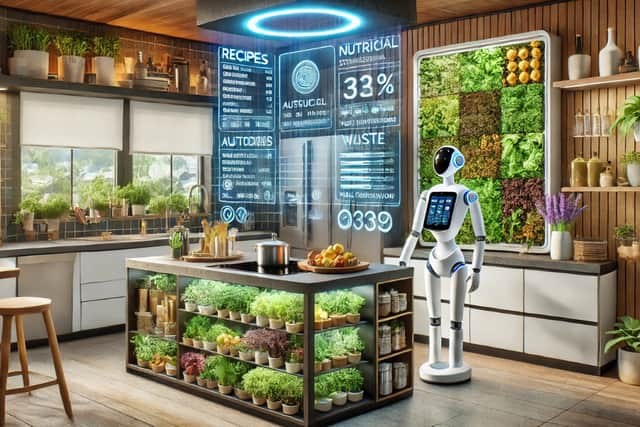
*Adaptive smart homes: Houses that learn from and respond to daily routines, adjusting lighting and temperature to optimise comfort and efficiency
*Sustainable, self-powered homes: Energy-efficient living powered by solar, wind and kinetic energy, ensuring homes generate their own electricity with near-zero carbon footprints
*Solar-integrated windows: Transparent solar panels embedded into windows, generating renewable energy without compromising natural light
*Cooling techniques for a warming world: Climate-responsive home design will ensure houses remain cool as global temperatures rise
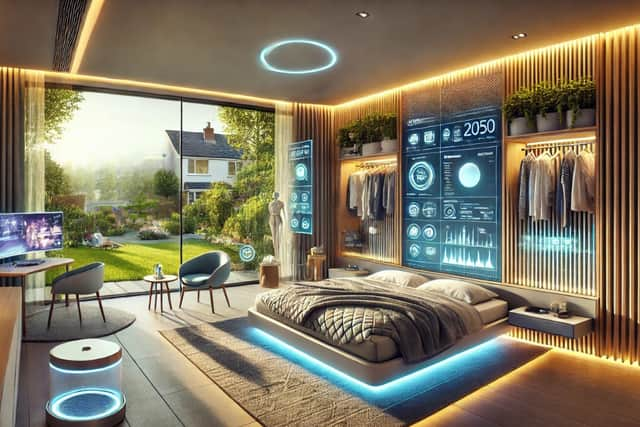
Commenting on the AI predictions, Avant Homes head of architectural design, Tom Smith, said: “AI is giving us a glimpse of what could be reality for new homes within the next 25 years.
“As technology advances, so will the way we design and interact with our homes. By 2050, homes will be smarter, more efficient and tailored to how we live and responsive to any change in climate.
“Fully electrified homes, wireless power, AI-managed green spaces and climate-responsive materials aren’t just futuristic concepts.
“They are realistic advancements that could transform the way we live within a generation.”